Choosing a chaff cutter starts with a practical question: how much fodder must the farm process before feeding or storage begins? A reliable chaff cutter capacity calculation divides the daily material weight by the time available for cutting. The result gives you a throughput target to compare with a machine’s stated capacity and, ultimately, with a material test.
The calculation is straightforward, but the inputs need care. Fresh grass, dry straw and mixed fodder do not necessarily pass through a cutter at the same rate. Loading, interruptions and discharge handling also affect how much material your team can finish during a working shift.
This guide explains how to calculate your requirement, compare it with FCN.FM’s supplied product specifications, and prepare a useful acceptance test. All farm workloads below are illustrative planning examples, not measured machine performance.
1. Establish the Daily Weight and Processing Window
Measure the material entering the cutter
Start with the weight of fodder that actually needs cutting. Use the material’s weight as handled, including its existing moisture, rather than estimating throughput from dry matter alone.
A livestock ration may be expressed partly in dry matter, but the cutter handles the full physical load. If your feeding records use dry matter quantities, establish the corresponding fresh material weight before sizing the machine. Fresh and dry materials also differ in their storage and preservation requirements; FAO’s silage guidance provides useful background on these distinctions.[2]
For an existing farm, weigh representative incoming batches and record the total processed during normal and busy days. For a planned operation, build the estimate from the feeding plan, then validate it against actual material weights when trials become possible.
Keep the measurement boundary consistent. For example, decide whether the recorded weight includes material later rejected during sorting. Otherwise, your calculated input requirement and measured cutter output may describe different workloads.
Separate the schedule from actual cutting time
A two-hour fodder preparation window does not automatically provide two hours of cutting. Operators may also need to collect material, remove foreign objects, move containers and clean the work area.
Record two time values:
- Total processing window: the time available before the fodder must be ready.
- Effective cutting time: the portion available for material to pass through the operating cutter.
For example, a hypothetical farm with a two-hour window might reserve half an hour for preparation and handling, leaving 1.5 hours for cutting. This is a planning assumption, not a standard allowance. Use your own workflow observations.
Also calculate the busiest foreseeable workload. A machine selected only for an average day may leave insufficient time when more material arrives or another farm task delays preparation.
2. Use a Simple Chaff Cutter Capacity Calculation
The basic formula is:
Required average throughput (kg/h) = material weight to process (kg) ÷ effective cutting time (h)
Use kilograms and hours consistently. The answer is the average processing rate needed while cutting is taking place.
Worked examples for different workloads
The following examples show the arithmetic only. They do not represent recommended feeding quantities, particular livestock populations or guaranteed machine outputs.
| Illustrative workload | Material to process | Effective cutting time | Required average throughput |
|---|---|---|---|
| Farm A: routine daily batch | 600 kg | 1.5 h | 400 kg/h |
| Farm B: larger daily batch | 1,200 kg | 2 h | 600 kg/h |
| Farm C: concentrated preparation period | 1,500 kg | 1.5 h | 1,000 kg/h |
| Farm D: peak workload | 2,400 kg | 2 h | 1,200 kg/h |
For Farm B, the calculation is 1,200 ÷ 2 = 600 kg/h. This means the operation must sustain that average rate during the two hours allocated to cutting.
If the same farm loses half an hour to handling, its effective cutting time becomes 1.5 hours. Its requirement then becomes 1,200 ÷ 1.5 = 800 kg/h. The material quantity has stayed the same, but the shorter window changes the selection requirement considerably.
Allow for disruption using actual operating conditions
Avoid choosing a machine solely because its highest stated output equals your calculated requirement. That leaves the schedule dependent on achieving the top of the range consistently.
Instead, assess what happens when cutting starts late, a difficult batch feeds slowly or the receiving area fills. You can address these conditions by selecting additional capacity, extending the cutting window or improving material handling.
There is no universal spare-capacity percentage suitable for every farm. Build the allowance around measured interruptions and the consequences of missing the feeding or storage deadline.
3. Compare the Requirement with Verified FCN.FM Specifications
FCN.FM’s supplied product fact sheets list the following specifications. These are supplier-stated capacity ranges; actual output depends on material and operating conditions. The company website is listed in Reference 1 for supplier contact and confirmation of current documentation.
| Product name from supplied fact sheet | Model | Motor power | Capacity | Material suitability stated in fact sheet |
|---|---|---|---|---|
| Vertical chaff cutter machine | 2.8 | 4KW | 600-800kg/h | Wet and dry material available |
| Horizontal chaff cutter machine | 2.8 | 4KW | 600-800kg/h | Wet and dry material available |
| Vetrical chaff cutter | 3.8 | 5.5KW | 800-1500kg/h | Wet and dry material available |
The product names and specification values above reproduce the supplied fact sheets. Detailed test conditions, cutting-length specifications and electrical requirements should be confirmed with the manufacturer.
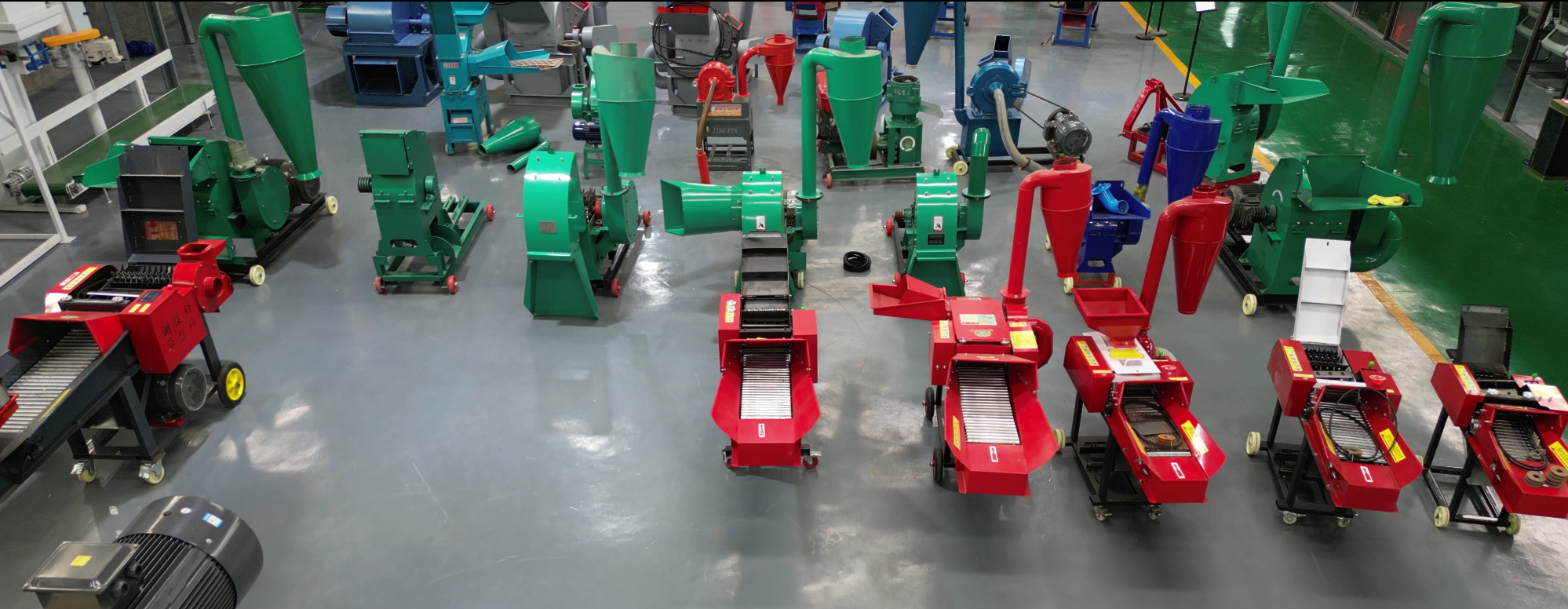
Company-supplied chaff cutter image; confirm the configuration supplied with your quotation.
How the example workloads compare
Farm A requires 400 kg/h. This is below the lower end of both model 2.8 capacity ranges. Those machines are candidates for evaluation, provided a representative test confirms the required output and acceptable cut quality.
Farm B requires 600 kg/h. This equals the lower end of the model 2.8 ranges. The paper comparison is suitable for an initial shortlist, but interruptions or difficult material could extend the schedule. Confirm performance under the intended conditions.
Farm C requires 1,000 kg/h. This exceeds the stated model 2.8 ranges and falls within the model 3.8 range. The model 3.8 therefore warrants evaluation, with a test targeting the farm’s required sustained rate.
Farm D requires 1,200 kg/h. This also falls within the model 3.8 range. Being inside the range does not establish that every material will achieve the required output. Test the peak workload and consider whether the preparation window can be extended if necessary.
Compare configurations beyond capacity
The two model 2.8 products have the same listed motor power and capacity. Those figures alone do not establish which arrangement best suits your farm.
Ask for drawings or a demonstration showing the feed position, discharge arrangement, working space and cleaning access. Compare how each configuration fits your loading method and receiving containers. Confirm dimensions, machine weight and other unlisted details directly with FCN.FM.
4. Adjust the Plan for Fodder and Material Handling
Wet and dry fodder need separate checks
All three supplied fact sheets state that wet and dry material is available for processing. That suitability statement does not establish identical throughput across materials.
Record the species or material type, moisture condition, stem characteristics and incoming bundle size for each planned application. A test using fresh grass should not be treated as proof of the same output on dry straw.
If the farm regularly changes materials, calculate the daily requirement for each important workload. Where several materials share one processing window, estimate their cutting times separately using relevant test results, then add the handling time between batches.
Define acceptable cutting quality
Throughput is useful only when the processed fodder meets the farm’s needs. Agree on the desired cutting result before testing, including how you will assess long pieces, uneven cutting and material requiring another pass.
The supplied specifications do not provide cutting-length ranges or tolerances. Ask the manufacturer to confirm the available configuration and demonstrate the result on your material. Keep any agreed acceptance criteria in the purchase documentation.
Check the whole fodder cutting workflow
Map the material’s route from storage to the cutter and onward to feeding or preservation. A cutter can spend substantial time waiting if loading or discharge handling cannot keep pace.
Check whether workers can prepare the next batch safely, whether containers can be exchanged promptly and whether the discharge area remains clear. Include cleanup and material changes in the schedule.
For maintenance or clearing work that exposes workers to hazardous energy, use an appropriate isolation procedure. OSHA’s control-of-hazardous-energy guidance explains the underlying principles; applicable local requirements should guide implementation.[3]
5. Verify Capacity Before Finalizing the Purchase
A representative material test is the strongest bridge between a catalogue capacity and your farm’s workload. Ask FCN.FM to test the intended material under agreed conditions and provide the results with the quotation.
Company-supplied working video. Use it to review operation; request measured test data to assess capacity.
Use a test record that supports comparison
Agree on the following information before the demonstration:
- Product name, model, motor power and supplied configuration.
- Material type, moisture condition and incoming form.
- Weighed input and acceptable processed output.
- Elapsed cutting time, with interruptions recorded separately.
- Feeding method, number of operators and discharge arrangement.
- Cutting-quality observations and any material requiring reprocessing.
Calculate accepted output weight ÷ elapsed test time to obtain the demonstrated rate. State whether elapsed time includes interruptions. For workflow planning, also record the full time from preparation to completion so that handling losses remain visible.
Use enough representative material to observe sustained operation. Agree on the test duration and sampling method with the manufacturer rather than relying on a brief demonstration of a small, easily fed batch.
Compare operating cost at the required output
Purchase price is only part of the decision. Ask about spare-part availability, maintenance access, delivery costs and the electrical supply needed for the quoted configuration.
Motor power alone does not establish electricity consumption per tonne. Use measured energy consumption and accepted output where available. Likewise, estimate labor cost from the complete preparation workflow, including loading, material movement and cleaning.
The right chaff cutter is one that can complete your real workload within the available time while producing acceptable fodder. Calculate the requirement, compare it with the supplied ranges and verify it using representative material. Contact Henan Macin Machinery Equipment Co., Ltd. through FCN.FM with your daily weight, fodder conditions and processing window to discuss a suitable configuration and material test.
References
- FCN.FM / Henan Macin Machinery Equipment Co., Ltd. — company website and supplier contact. Product figures in this article come from the verified supplier fact sheets provided for this article; request current documentation and test conditions when ordering.
- FAO — Silage Making in the Tropics with Particular Emphasis on Smallholders. Background on forage characteristics, silage preparation and preservation.
- OSHA — Control of Hazardous Energy: Lockout/Tagout. Guidance on controlling hazardous energy during servicing and maintenance.