Choosing between a chaff cutter model 2.8 vs 3.8 comes down to one practical question: how much material do you actually need to process each day, and how many hours do you have to do it? Both models sit in FCN.FM's chaff cutter range, but they differ in motor power, throughput and physical configuration. Picking the right one prevents the two most common mistakes buyers make — overspending on capacity you will never use, or buying a machine that becomes the bottleneck of your feeding operation.
This guide compares the verified specifications of the Model 2.8 and Model 3.8, explains the difference between vertical and horizontal configurations, and walks through illustrative workload calculations so you can match a machine to your real daily volume.
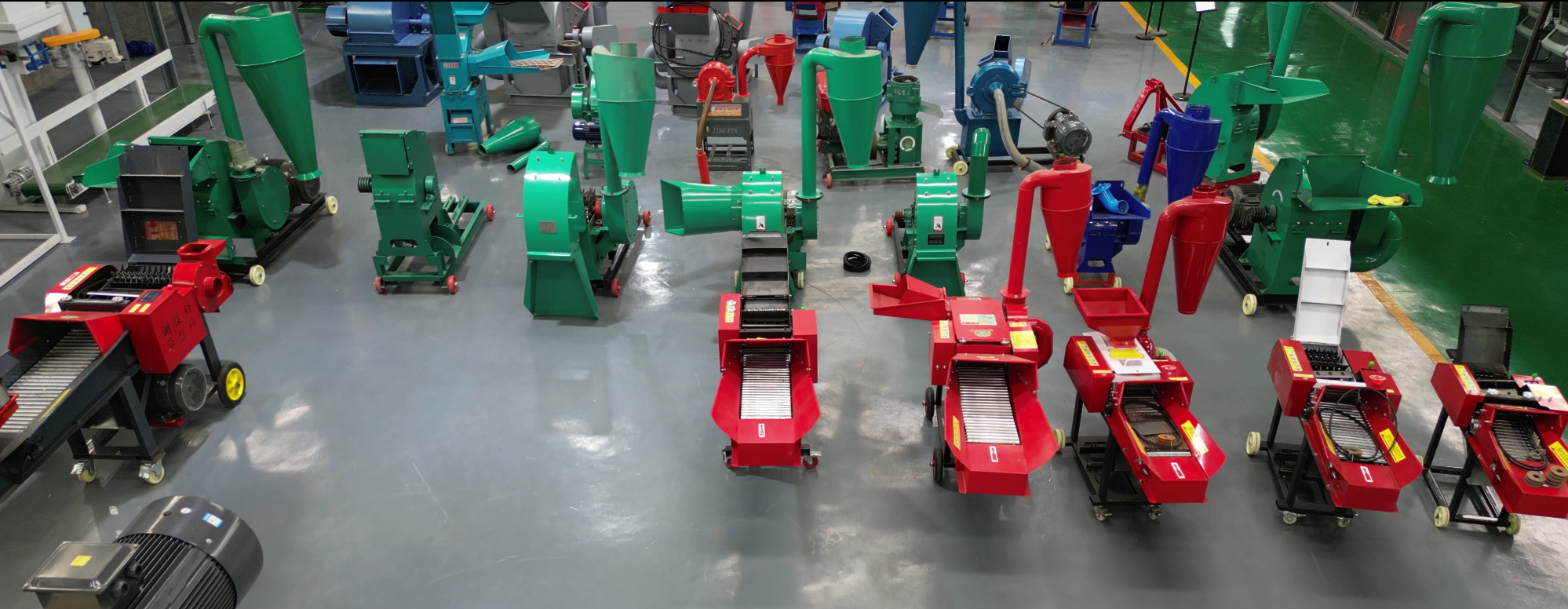
FCN.FM chaff cutter machine — available in vertical and horizontal configurations for wet and dry fodder.
The Three Configurations You Are Actually Comparing
The "2.8 vs 3.8" comparison is not simply two machines. It is three distinct configurations, because the Model 2.8 is offered in both a vertical and a horizontal build:
- Vertical Chaff Cutter Machine (Model 2.8) — 4KW motor, 600–800 kg/h capacity
- Horizontal Chaff Cutter Machine (Model 2.8) — 4KW motor, 600–800 kg/h capacity
- Vertical Chaff Cutter (Model 3.8) — 5.5KW motor, 800–1500 kg/h capacity
All three share the same core design philosophy: high efficiency, easy operation, and the ability to handle both wet and dry material. That makes them suitable for green fodder, hay, straw and silage preparation across cattle, dairy, sheep, goat and horse feeding operations.
Specifications at a Glance
| Specification | Vertical Model 2.8 | Horizontal Model 2.8 | Vertical Model 3.8 |
|---|---|---|---|
| Motor power | 4KW | 4KW | 5.5KW |
| Capacity | 600–800 kg/h | 600–800 kg/h | 800–1500 kg/h |
| Configuration | Vertical | Horizontal | Vertical |
| Wet / dry material | Yes | Yes | Yes |
| Operation | Easy | Easy | Easy |
The key differentiator is clear: the Model 3.8 delivers roughly 33% more motor power and an upper capacity ceiling up to 1500 kg/h, nearly double the top end of the Model 2.8. For operations processing more than about 4 tonnes per day, that difference matters.
How to Calculate Your Real Workload
Rated capacity is a laboratory figure measured under continuous, ideal feeding. Real-world output is always lower because of feeding delays, material variation and short stops. A practical planning rule is to apply a utilization factor of 70–80% to the rated range.
Step 1: Determine Daily Volume
Estimate the total kilograms of fodder you chop per day. Include everything: green fodder, dry hay, straw and any silage material run through the machine.
Step 2: Apply the Utilization Factor
Multiply your daily volume by 1.25 to 1.4 to find the effective hourly capacity you need, then divide by your available processing hours.
Step 3: Compare Against Rated Capacity
Choose the model whose rated range comfortably covers your calculated requirement.
Illustrative Workload Examples
| Farm scenario | Daily volume | Processing hours | Effective need | Recommended model |
|---|---|---|---|---|
| Small dairy, 15 cows | 300 kg/day | 2 h | ~190 kg/h | Vertical or Horizontal 2.8 |
| Medium cattle farm, 50 head | 800 kg/day | 3 h | ~380 kg/h | Model 2.8 (either) |
| Commercial feed operation | 3,000 kg/day | 5 h | ~860 kg/h | Model 3.8 |
| Silage / contract chopping | 6,000 kg/day | 6 h | ~1,430 kg/h | Model 3.8 |
These figures are illustrative. Your actual numbers depend on material type, moisture content and cutting length settings. As a general threshold: if your effective hourly need stays under 600 kg/h, the Model 2.8 is usually sufficient; if it climbs toward 800 kg/h or above, the Model 3.8 is the safer choice.
Vertical vs Horizontal: Does Configuration Matter?
Because the Model 2.8 exists in both builds, buyers often ask which configuration to choose when the specifications are identical.
Vertical Chaff Cutter
The vertical design feeds material from the top into a vertically oriented cutting chamber. It is generally more compact in footprint and is the configuration used for the higher-capacity Model 3.8. Vertical machines are a common choice where floor space is limited and material is fed by hand or by a simple conveyor.
Horizontal Chaff Cutter
The horizontal build feeds material along a horizontal path. Some operators find the feeding angle more ergonomic for long straw and hay, and the layout can suit existing workflow arrangements in certain barns. The Horizontal Model 2.8 carries the same 4KW motor and 600–800 kg/h capacity as its vertical counterpart.
Which Should You Pick?
If capacity is your deciding factor and you need the higher throughput, the Model 3.8 is only available in the vertical configuration. If you are choosing within the Model 2.8 range, the decision usually comes down to floor layout, feeding ergonomics and operator preference rather than performance — both handle wet and dry material equally.
Other Selection Criteria Beyond Capacity
Capacity and motor power are the headline numbers, but B2B buyers should weigh several additional factors before committing to a model:
- Power supply availability — Confirm that your site can reliably supply the required motor power (4KW for Model 2.8, 5.5KW for Model 3.8) at your local voltage and phase.
- Material mix — All three models handle wet and dry material, but very fibrous or coarse material may benefit from the higher power reserve of the 3.8.
- Cutting length requirements — Different livestock and feeding systems require different chop lengths; confirm the adjustable range with the manufacturer for your material.
- Duty cycle — Continuous commercial operation places more thermal and mechanical load on the motor, favouring the larger 5.5KW unit.
- Spare parts and blades — Blade availability and replacement cost affect long-term running cost; ask about consumable supply for your chosen model.
- Future expansion — If you plan to grow herd size or take on contract chopping, sizing up now avoids a costly upgrade later.
Cost Considerations for Buyers
Purchase price generally scales with motor power, capacity and build configuration, so the Model 3.8 commands a higher price than either Model 2.8 variant. However, the true cost comparison should include:
- Cost per tonne processed — A higher-capacity machine processing more material per hour can lower labour cost per tonne.
- Labour hours saved — Faster throughput means fewer operator hours for the same daily volume.
- Energy cost — The 5.5KW motor draws more power per hour, but completes the job in less time; total energy per tonne is often comparable.
- Downtime risk — An undersized machine running at maximum load continuously wears faster and is more likely to bottleneck your operation.
For exact pricing, configuration options and OEM/ODM requirements, request a quotation directly from the manufacturer, as pricing depends on specification, quantity and destination.
Quick Decision Summary
- Choose the Vertical or Horizontal Model 2.8 if your effective hourly need is under ~600 kg/h, your herd is small to medium, and budget or power supply is a constraint.
- Choose the Vertical Model 3.8 if your effective hourly need approaches or exceeds ~800 kg/h, you operate commercially, or you want headroom for growth.
- Choose horizontal over vertical (within 2.8) based on floor layout and feeding ergonomics, since performance is identical.
Conclusion
The chaff cutter model 2.8 vs 3.8 decision ultimately rests on matching rated capacity to your real, de-rated workload. The Model 2.8 — in either vertical or horizontal form — is a capable, efficient machine for small and medium feeding operations at 600–800 kg/h. The Model 3.8, with its 5.5KW motor and 800–1500 kg/h range, is the right tool for larger herds and commercial chopping where throughput cannot be a bottleneck.
If you are unsure which model fits your operation, the FCN.FM team can review your daily volume, material type and available processing hours and recommend the most cost-effective configuration. As a manufacturer with in-house production and OEM/ODM capability, FCN.FM can also tailor power systems, capacities and specifications to your requirements. Contact FCN.FM for a model recommendation and a detailed quotation.
References
- FCN.FM — Chaff Cutter Machine product specifications: https://www.chaffcuttermachine.com/
- FCN.FM — Vertical Chaff Cutter Machine (Model 2.8) product page: https://www.chaffcuttermachine.com/
- FCN.FM — Horizontal Chaff Cutter Machine (Model 2.8) product page: https://www.chaffcuttermachine.com/
- FCN.FM — Vertical Chaff Cutter (Model 3.8) product page: https://www.chaffcuttermachine.com/