Chaff Cutter Pre-Start Checklist for Farm Operators
A reliable chaff cutter pre-start checklist gives farm operators a clear decision before processing begins: is the machine, installation, work area and material ready for use? It should also establish when to stop and call a supervisor rather than attempt an adjustment. Agricultural machinery guidance emphasizes checking equipment condition, guards, operator training and instructions before starting work. (hse.gov.uk)
This guide provides a practical framework for farm managers, operators and equipment buyers. It is not a substitute for the supplied manual. Startup sequences, permitted materials, inspection methods and operating limits must follow the instructions for the exact machine and configuration. If those instructions are missing or unclear, obtain clarification before operating. (hse.gov.uk)
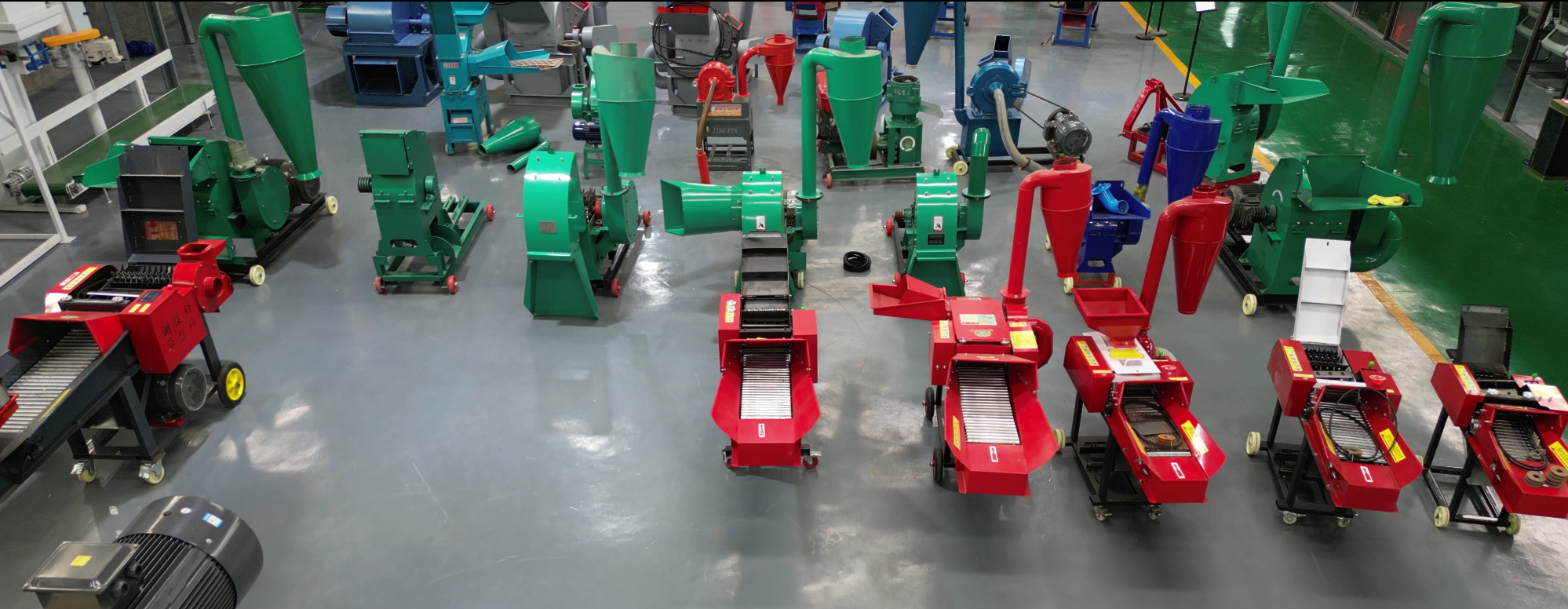
Company chaff cutter image; use the supplied manual to identify the inspection points on your specific machine.
Check Machine Condition Before Connecting Power
Establish a safe inspection condition
Keep the machine isolated during checks that require access to blades, drives or other hazardous parts. Stop the equipment, disconnect its power source and wait for all movement to cease before servicing, adjusting, cleaning or clearing it. Prevent reconnection using the applicable isolation procedure. A stop button alone is not a substitute for disconnecting and securing the energy source. (osha.gov)
Do not assume a silent cutter is ready to touch. Moving assemblies may still be coasting, and releasing trapped material can permit unexpected movement. Follow the manual's instructions for stored-energy control and access. (hse.gov.uk)
Use a repeatable walk-around
Build the following inspection points into the machine-specific checklist. Record an actual condition rather than simply marking every item “checked.”
| Inspection point | What the operator should verify | Hold-start condition |
|---|---|---|
| Frame and supports | Installation matches the manual; no visible damage or instability | Cracked support, rocking machine or insecure mounting |
| Feed inlet and discharge | External routes are clear and correctly assembled | Obstruction requiring access or a displaced component |
| Covers and fasteners | Required parts are present and secured | Missing fastener, loose cover or damaged fastening point |
| Blades and holders | Inspection completed by an authorized person using the prescribed access method | Suspected crack, deformation or loose blade mounting |
| Drive and lubrication points | Scheduled maintenance is current and any required checks are complete | Unresolved drive defect or overdue safety-critical maintenance |
| Previous fault record | Outstanding defects have an authorized release | Unresolved vibration, contact noise or repeated tripping |
Treat this table as a checklist design aid, not a replacement for the manufacturer's acceptance criteria. Machinery must remain suitable for use and maintained in a safe condition. (hse.gov.uk)
Keep blade tolerances model-specific
Your inspection sheet should provide spaces for the manufacturer's blade clearance, fastener torque, wear limit and replacement instructions—not fill them with generic values. Ask the supplier to identify which checks belong to an operator and which require maintenance personnel.
For spare-parts purchasing, record the machine identification, blade part number and applicable revision. Ask the manufacturer to confirm compatibility before ordering. Avoid accepting “looks similar” as a purchasing criterion for a cutting component.
Verify Guards, Controls and Operator Readiness
Check protection before testing operation
Confirm that the required guards and covers are installed and secured. Where safety devices are fitted, use the manufacturer's prescribed verification procedure. Never bypass an interlock, remove a guard or alter a feed opening to make operation faster or reduce blockages. (hse.gov.uk)
Pay particular attention to access around the feed mechanism and transmission. Drawing-in hazards require effective protection and safe working methods; reaching into machinery to clear material is not an acceptable operating technique. (hse.gov.uk)
Add a clear question to the form: “Has any guard, chute, control or safety device changed since the last approved inspection?” A “yes” answer should trigger review before use, not an assumption that the modification is harmless. HSE guidance highlights the need to maintain protection when machinery is modified. (hse.gov.uk)
Separate identification from functional testing
Before energizing, identify the normal stop, emergency stop where fitted, and supply isolator. Keep access to those controls unobstructed. Carry out functional tests only in the safe condition and sequence specified by the manufacturer; do not improvise a test involving exposed moving parts. (hse.gov.uk)
Confirm that the assigned operator understands the manual, permitted feeding method and stopping procedure. Select protective equipment through the task risk assessment and machine instructions. Keep loose clothing, jewelry and unsecured hair away from drawing-in points. Protective equipment does not replace guarding. (hse.gov.uk)
For shared operation, name the person controlling startup and agree on a stop signal before work begins. (hse.gov.uk)
Prepare the Work Area and Material Flow
Define where people and materials belong
Include a simple work-area sketch in the local operating procedure. Mark the operator position, incoming material location, discharge destination, isolation point and pedestrian route. Use the manufacturer's safety information and site risk assessment to determine separation requirements rather than inventing a universal clearance. (hse.gov.uk)
Before release, ask the operator to confirm:
- The footing and access route are suitable for the planned task.
- Stored material does not obstruct controls or maintenance access.
- The discharge destination is ready without placing someone in a hazardous position.
- Other workers understand that processing is about to begin.
- Lighting allows the operator to see the controls and feeding area.
These are useful prompts for the site's work-planning process. HSE recommends planning machinery work, communicating risks and ensuring everyone involved understands their role. (hse.gov.uk)
Make collection part of the operating plan
Specify how processed material will be removed before starting. Do not create a routine that depends on someone approaching dangerous moving parts to reposition a container or remove an accumulation. Where access becomes necessary, stop and apply the appropriate isolation procedure. (osha.gov)
For equipment buyers, ask the supplier for installation and access drawings alongside the quotation. Use them to review feeding, discharge, cleaning and maintenance arrangements with the people who will actually operate the machine. Make the approved layout part of commissioning documentation.
Check the Electrical Installation Without Opening It
Match the installation to the actual machine
An operator's visual inspection does not establish that an electrical installation is correctly designed. Have a competent electrician verify supply compatibility, protective arrangements and installation condition. Check the actual rating plate and wiring documentation rather than selecting a connection from motor power alone. HSE advises confirming both supply voltage and the current the equipment requires. (hse.gov.uk)
For procurement, request a written electrical schedule covering voltage, phase, frequency, rated current, starting arrangement and connection requirements. Leave unspecified details for manufacturer confirmation; do not copy them from another machine's brochure.
Inspect accessible components
Before connection, look for damaged cable insulation, crushed leads, loose external fittings, damaged plugs or evidence of overheating. Keep cables away from likely mechanical damage and pedestrian routes. Do not open electrical enclosures or attempt wiring repairs as part of an operator check. Suspect equipment should remain out of service pending competent assessment. (hse.gov.uk)
Wet fodder capability does not establish that the electrical installation is suitable for rain, washdown or a damp location. Have environmental suitability and any required residual-current protection confirmed for the installation. Never bypass protective devices or repeatedly reset a tripping system without investigating the fault. (hse.gov.uk)
Confirm Materials, Then Authorize Startup
Identify the batch before feeding
Create a material-release entry for each planned batch. Record the material description and condition, and check it against the exact model's permitted-material instructions. If those instructions do not clearly cover the proposed material, ask the manufacturer before processing it. Machinery selection must account for suitability for the intended job. (hse.gov.uk)
As a proposed receiving procedure, inspect material away from the machine inlet for visible stones, wire, packaging, tools and other foreign objects. Quarantine suspect batches rather than relying on the cutter to separate contaminants. Ask the supplier to define any required upstream sorting or protection for your application.
Do not translate a general “wet and dry material” description into permission to process every crop condition. Obtain written confirmation of relevant limits, including material dimensions, moisture conditions and feeding restrictions where applicable.
Follow the supplied startup sequence
Once all checks pass, follow the manual's startup procedure exactly. Do not assume that an empty run, a particular delay or a universal feeding rate applies to every chaff cutter. Any running check must take place with protection restored and people clear of hazardous areas. If another inspection is needed afterward, isolate again before access. (hse.gov.uk)
Record observations during the authorized initial run. Stop if there is unexpected vibration, contact noise, unstable mounting, electrical trouble or another condition outside the instructions. Do not increase feed to investigate poor output or clear a blockage while the machine is moving. Safe stopping and disconnection come before cleaning or unclogging. (osha.gov)
Keep a useful release record
A practical form can include machine identification, operator, date, material batch, checklist result, defect description and authorization to return to service. Separate “passed,” “not applicable” and “failed”; a blank box should not mean approval.
For recurring chaff cutter output problems, ask operators to record what changed: material condition, recent maintenance, replacement parts or installation arrangements. Give that history to the manufacturer rather than requesting a diagnosis from a symptom alone.
Conclusion
The best pre-start checklist is specific enough to guide a decision and simple enough to use consistently. Check condition, guarding, the work area, electrical readiness and material suitability, then follow the exact model's manual for startup and operating limits.
Contact FCN.FM — Henan Macin Machinery Equipment Co., Ltd. for model-specific documentation, maintenance information and spare-parts clarification when preparing your farm's operating checklist.
References
The following US and UK resources provide general safety guidance. They do not establish certification or compliance for any particular machine; local requirements and model-specific instructions must also be assessed.