Getting the chaff cutting length for dairy cattle right is one of the simplest yet most overlooked factors in ration management. Chop length directly influences how much dry matter a cow consumes, how efficiently she digests fibre, and whether she risks metabolic disorders such as acidosis. A chaff cutter set too coarse leaves long, unpalatable stems that cows sort through and waste; set too fine, and the ration loses the effective fibre needed to keep the rumen functioning properly. This guide explains the recommended chop lengths for dairy rations, how they affect animal performance, and how to achieve consistent results using FCN.FM chaff cutter machines in the 600–800 kg/h range.
Why Cutting Length Matters in Dairy Rations
Dairy cows are ruminants, meaning they depend on a healthy rumen microbial population to break down fibrous material. The physical form of that fibre — its particle length — plays a critical role in stimulating rumination, maintaining rumen pH, and preventing feed sorting.
The Role of Effective Fibre
Effective fibre (also called physically effective neutral detergent fibre, or peNDF) refers to fibre particles long enough to trigger chewing and rumen contractions. When chaff is cut too short, particles pass through the rumen too quickly, reducing the time available for microbial fermentation and lowering butterfat production.
Feed Sorting and Intake
Cows naturally sort against long, coarse particles and in favour of short, fine ones. If chop length is inconsistent, dominant cows consume the best parts of the ration while subordinate animals are left with a less balanced diet. Uniform cutting length minimises sorting and ensures every animal receives a nutritionally complete ration.
Recommended Chop Lengths for Dairy Cattle
The ideal cutting length depends on the type of fodder, the stage of lactation, and the overall ration composition. The table below summarises widely accepted guidelines used by dairy nutritionists and extension services.
| Fodder Type | Recommended Cutting Length | Purpose |
|---|---|---|
| Corn silage | 10–20 mm (3/8–3/4 in) | Balances fibre effectiveness with packing density in the silo |
| Grass silage | 15–25 mm | Maintains effective fibre without excessive sorting |
| Dry hay / straw | 25–50 mm | Provides scratch factor and rumen fill |
| Green fodder (fresh cut) | 20–40 mm | Encourages intake while preserving structural fibre |
| Total mixed ration (TMR) forage component | 15–30 mm | Supports rumen health across the full ration |
Silage-Specific Considerations
For chaff cutter for silage applications, shorter chop lengths (10–20 mm) are generally preferred because they allow tighter packing, reduce oxygen pockets, and promote faster fermentation. However, cutting silage too fine — below 10 mm — removes nearly all effective fibre and can lead to sub-acute ruminal acidosis (SARA).
Dry Fodder and Straw
Dry materials such as wheat straw or mature hay require longer cutting lengths (25–50 mm) to preserve their structural integrity. These materials are often used as a rumen filler or to dilute high-energy rations, so maintaining particle length is essential.
How Cutting Length Affects Digestion and Intake
Rumination and Saliva Production
Cows ruminate for 6–8 hours per day, and each chewing cycle produces saliva rich in sodium bicarbonate — a natural buffer that stabilises rumen pH. Longer particles require more chewing, which means more saliva and better pH control. Research from land-grant university extension programmes consistently shows that increasing peNDF through appropriate chop length raises rumination time and improves milk fat percentage.
Digestion Rate and Passage Speed
Shorter particles have a larger surface-area-to-volume ratio, which can speed up microbial attachment and initial digestion. However, they also pass through the rumen faster, reducing total fermentation time. The goal is to find a balance: short enough for efficient microbial access, long enough to remain in the rumen for adequate fermentation.
Dry Matter Intake
When chop length is too long, cows may physically struggle to consume enough feed, especially in high-producing animals with limited rumen capacity. Overly coarse chaff also increases feed refusal and wastage. A consistent, moderate chop length encourages steady intake throughout the day.
Adjusting Your FCN.FM Chaff Cutter for Consistent Cutting Length
Achieving a uniform chop length requires proper machine setup and regular maintenance. FCN.FM chaff cutter machines are designed with adjustable blade systems and feed roller mechanisms that allow operators to fine-tune output particle size.
Blade Sharpness and Clearance
Dull blades tear rather than cut, producing uneven particle lengths and increasing motor load. Inspect blades before each operating session and sharpen or replace them when cutting quality deteriorates. The clearance between the blade and the anvil (or counter-blade) should be set according to the material being processed — tighter for dry, brittle materials and slightly wider for wet, fibrous green fodder.
Feed Rate Control
Feeding material too quickly overwhelms the cutting mechanism and results in inconsistent particle sizes. Train operators to feed at a steady, even rate that matches the machine's rated capacity. For the FCN.FM vertical and horizontal chaff cutter models rated at 600–800 kg/h, this means maintaining a feed rate that keeps the motor running smoothly without bogging down.
Wet and Dry Material Settings
FCN.FM chaff cutters are designed to handle both wet and dry material. Wet green fodder requires sharper blades and a slightly slower feed rate to prevent clogging. Dry straw and hay can generally be processed at higher feed rates, but operators should monitor output length and adjust the feed gate accordingly.
FCN.FM chaff cutter in operation, demonstrating consistent cutting performance across wet and dry fodder.
Capacity Planning: Matching Machine Output to Daily Workload
Selecting the right chaff cutter capacity depends on herd size, feeding frequency, and the type of fodder being processed. Below is a practical planning example using FCN.FM's 600–800 kg/h models.
Daily Fodder Requirement
A dairy cow typically consumes 10–15 kg of dry matter per day, with forage making up 40–60% of the total ration. For a 50-cow dairy operation:
- Average forage dry matter intake per cow: ~7 kg/day
- Total daily forage requirement: 50 × 7 = 350 kg DM
- Fresh weight (assuming 35% DM for green fodder): 350 ÷ 0.35 = 1,000 kg fresh fodder per day
Machine Operating Time
Using an FCN.FM chaff cutter rated at 600–800 kg/h (4 KW motor power):
- At 700 kg/h average output: 1,000 ÷ 700 ≈ 1.5 hours of operation per day
- Split across two feeding sessions (morning and evening): ~45 minutes per session
This leaves ample time for machine maintenance, cleaning, and blade inspection between runs.
Scaling for Larger Herds
For operations exceeding 100 cows, the FCN.FM vertical chaff cutter (model 3.8, 5.5 KW, 800–1500 kg/h) offers higher throughput and reduces daily operating time. Farms processing silage in bulk may also benefit from running the machine continuously during harvest and storing chopped material in a silo or bunker.
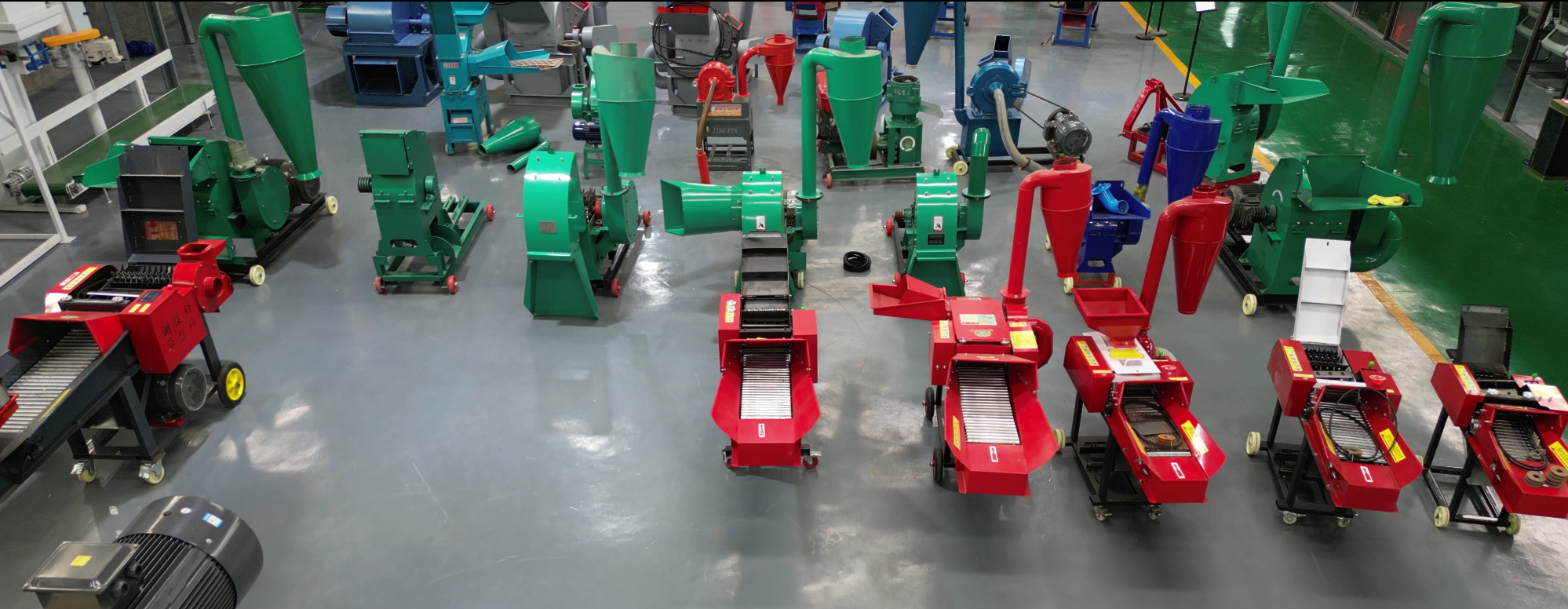
FCN.FM vertical chaff cutter machine — 4 KW motor, 600–800 kg/h capacity, suitable for wet and dry fodder.
Choosing Between Vertical and Horizontal Chaff Cutter Models
FCN.FM offers both vertical and horizontal chaff cutter configurations, each suited to different farm layouts and material types.
Vertical Chaff Cutter (Model 2.8)
- Motor power: 4 KW
- Capacity: 600–800 kg/h
- Best for: Farms with limited floor space; green fodder and silage processing
- Advantage: Compact footprint, gravity-assisted feed intake
Horizontal Chaff Cutter (Model 2.8)
- Motor power: 4 KW
- Capacity: 600–800 kg/h
- Best for: Operations processing dry straw and hay in longer lengths
- Advantage: Easier feeding of long-stem material, consistent output for dry fodder
Both models handle wet and dry material and are built with high-efficiency cutting systems designed for daily dairy farm use.
Practical Tips for Consistent Chaff Quality
- Calibrate regularly: Check output particle length weekly using a simple sieve box or particle separator.
- Match length to ration type: Shorter for silage-based rations, longer for dry hay supplements.
- Monitor cow behaviour: Reduced rumination time or increased feed sorting signals a chop length problem.
- Maintain blades: Sharp blades cut cleanly; dull blades crush and tear, producing fines.
- Train operators: Consistent feed rate is as important as machine settings for uniform output.
Conclusion
Setting the correct chaff cutting length for dairy cattle is a low-cost management practice with measurable returns in intake, milk production, and rumen health. By matching chop length to fodder type and ration goals — and using a reliable machine such as the FCN.FM 600–800 kg/h chaff cutter — dairy producers can achieve consistent particle size, reduce feed waste, and support optimal animal performance.
FCN.FM manufactures a range of chaff cutter machines and animal feed processing equipment, with OEM/ODM customisation available for international buyers. For guidance on selecting the right model for your herd size and fodder conditions, or to request detailed specifications and export pricing, contact the FCN.FM team directly.
References
- Penn State Extension — Dairy Cattle Nutrition and Feeding Management: https://extension.psu.edu/animals-and-livestock/dairy
- FCN.FM Chaff Cutter Machine — Product Information: https://www.chaffcuttermachine.com/
- USDA Natural Resources Conservation Service — Silage Management Guidelines: https://www.nrcs.usda.gov/