Silage is one of the most reliable ways to preserve green fodder for year-round livestock feeding, but the quality of the final product depends heavily on what happens before the material ever enters the silo. A chaff cutter for silage preparation plays a central role in that early stage: chopping green fodder into short, uniform lengths before ensiling improves compaction, drives out trapped air, and creates the anaerobic conditions that beneficial lactic acid bacteria need to ferment the material properly. Farms that skip this step or cut too coarsely often end up with poorly packed silage, higher dry-matter losses, and feed that cattle and buffalo refuse to eat. This guide explains how chopping supports fermentation, which raw materials work best, how to manage moisture, and how FCN.FM's wet-and-dry capable chaff cutters fit into a practical silage workflow.
Why Chopping Green Fodder Matters Before Ensiling
Silage is essentially fermented forage stored in an oxygen-free environment. When green material is packed into a pit, bunker, or bag, the goal is to remove as much air as possible so that lactic acid bacteria can convert plant sugars into lactic acid, lowering the pH and preserving the feed.
Packing Density and Air Exclusion
Long, uncut fodder creates air pockets that are difficult to squeeze out, even with heavy tractors or manual tamping. Chopped material, by contrast, settles tightly and allows packing machinery to achieve higher density. Denser packing means less residual oxygen, faster pH drop, and a lower risk of spoilage from molds and yeasts at the silo face.
Faster, More Uniform Fermentation
Short, uniform chop lengths expose more plant surface area, which releases cell sugars more readily and gives lactic acid bacteria quicker access to their substrate. Fermentation proceeds faster and more evenly throughout the mass, producing a more stable, palatable silage with better nutrient retention.
Improved Feed Intake
Livestock tend to sort through long forage and waste more of it. Chopped silage is easier to mix into total mixed rations and is consumed more completely, reducing refusals and improving feed conversion.
Suitable Raw Materials for Silage Making
A wide range of green fodder crops and crop residues can be ensiled successfully when properly chopped. Common materials include:
- Maize (corn) forage – the most widely used silage crop worldwide due to its high energy content and good fermentability
- Sorghum and sorghum-sudangrass hybrids – drought-tolerant alternatives with strong silage performance
- Grass and legume mixtures – ryegrass, oats, berseem, alfalfa, and clover, often wilted slightly before ensiling
- Sugarcane tops and leaves – common in tropical and subtropical regions
- Crop residues – corn stover, wheat straw, and rice straw, often blended with green material or additives
- Fodder beet and other root tops – used in some European and Central Asian systems
The key requirement is that the material be green or lightly wilted, free of excessive soil contamination, and harvested at the right maturity stage for the species.
Moisture Considerations for Quality Silage
Moisture content is one of the most important — and most commonly mismanaged — variables in silage making. The ideal range depends on the storage structure and crop type.
| Silage System | Recommended Moisture Content | Notes |
|---|---|---|
| Bunker or pit silo | 60–70% | Allows good packing without excessive seepage |
| Upright (tower) silo | 55–65% | Lower moisture reduces pressure on walls |
| Bagged silage | 55–65% | Too wet causes clostridial fermentation |
| Direct-cut green chop | 70–80% | Requires wilting or blending for most systems |
If material is too wet, clostridial bacteria can dominate, producing butyric acid and off-flavors that reduce intake. If it is too dry, packing becomes difficult, air remains trapped, and heating and mold losses increase. A practical field test is the squeeze test: grab a handful of chopped material and squeeze firmly. A little moisture between the fingers is ideal; free-flowing juice indicates the material is too wet, while no moisture at all suggests it is too dry.
Chopping helps here as well. Shorter chop lengths increase surface area and allow moisture to be released and redistributed more evenly, which supports consistent fermentation throughout the silo.
How FCN.FM Chaff Cutters Support Silage Production
Not all chaff cutters handle green, high-moisture material well. Wet fodder is heavier, stickier, and more prone to clogging than dry straw, so the machine must be designed to process both wet and dry inputs reliably. FCN.FM's chaff cutter range is built with this dual capability in mind.
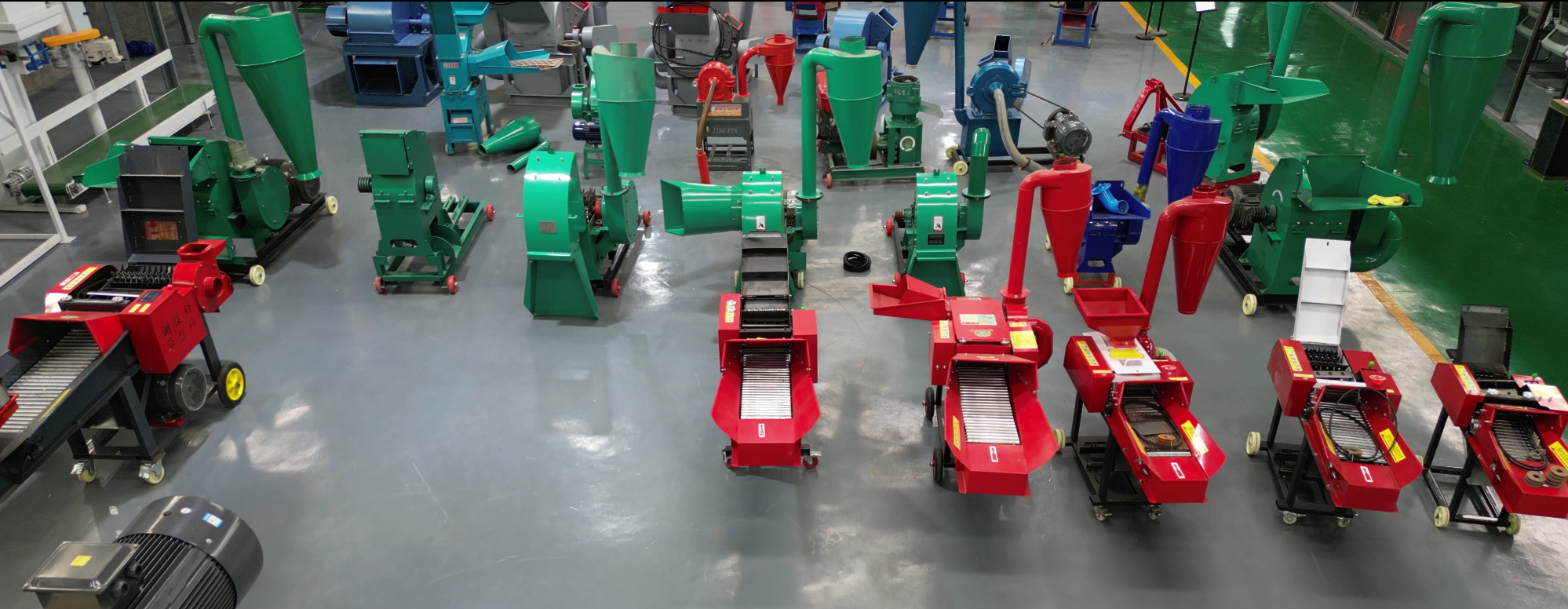
FCN.FM chaff cutter designed for both wet and dry fodder processing.
Wet and Dry Material Capability
FCN.FM chaff cutters are engineered to process both wet and dry material, which is essential for silage work. Green maize, grass, sorghum, and sugarcane tops can be fed directly without pre-drying, while the same machine can also handle dry straw and hay for mixed rations or dry roughage feeding. This flexibility lets a single machine serve silage making in the wet season and dry fodder processing year-round.
Machine Options and Capacities
FCN.FM offers both vertical and horizontal chaff cutter configurations to match different farm sizes and workflows:
- Vertical chaff cutter machine (model 2.8) – 4KW motor power, capacity 600–800kg/h, high efficiency, easy operation, wet and dry material available
- Horizontal chaff cutter machine (model 2.8) – 4KW motor power, capacity 600–800kg/h, high efficiency, easy operation, wet and dry material available
- Vertical chaff cutter (model 3.8) – 5.5KW motor power, capacity 800–1500kg/h, high efficiency, easy operation, wet and dry material available
For a smallholder dairy farm ensiling a few tonnes per day, the 600–800kg/h models are typically sufficient. Larger commercial operations or custom silage contractors handling higher daily volumes may benefit from the 800–1500kg/h model to keep up with harvest and hauling schedules. Exact specifications should be confirmed with the manufacturer based on your specific raw materials and daily workload.
Chaff cutter processing green fodder for silage preparation.
Matching Capacity to Daily Silage Workload
Planning the right machine size starts with a simple calculation. Estimate the total weight of green material to be ensiled per day, then divide by the machine's hourly capacity to determine operating hours needed. For example, a farm bringing in 4 tonnes of green maize per day using a 600–800kg/h cutter would need roughly 5–7 hours of chopping to keep pace with harvest. Factoring in feeding time, blade maintenance, and breaks helps avoid bottlenecks during the short window when crops are at ideal moisture and maturity.
Practical Tips for Better Silage with a Chaff Cutter
- Cut to the right length. For most grass and legume silage, a chop length of roughly 1–3 cm works well. For maize silage, slightly longer chops (around 1–2 cm) with some kernel processing are common. Uniform length improves packing and reduces sorting.
- Keep blades sharp. Dull blades tear rather than cut, producing uneven lengths and increasing power draw. Inspect and sharpen or replace blades regularly, especially when processing abrasive or high-fiber material.
- Chop close to the silo. Minimize the time between cutting and packing to reduce field losses and heating.
- Pack in thin layers. Add chopped material in shallow layers and compact each one thoroughly before adding the next.
- Seal promptly and completely. Cover the silo with an airtight sheet and weight it down to exclude oxygen throughout the fermentation period.
- Monitor moisture before chopping. Adjust wilting time or blending ratios based on the squeeze test and your storage system's target moisture range.
Choosing the Right Chaff Cutter for Your Silage Operation
When selecting a chaff cutter for silage, consider the following criteria:
- Wet-material handling – confirm the machine is rated for green, high-moisture fodder without clogging
- Throughput capacity – match hourly capacity to your daily harvest volume
- Power source availability – electric models suit farms with reliable grid power; diesel or tractor-driven options suit remote fields
- Chop length adjustability – useful for matching different crops and livestock classes
- Build quality and spare parts support – look for robust construction and accessible blade and belt replacements
- OEM/ODM customization – useful for distributors and larger operations needing specific configurations
FCN.FM supports OEM and ODM customization, so buyers with particular capacity, power, or branding requirements can request tailored configurations.
Conclusion
Chopping green fodder with a reliable chaff cutter is one of the simplest and most effective ways to improve silage quality. Short, uniform chop lengths improve packing density, speed up fermentation, reduce spoilage losses, and increase feed intake. FCN.FM's wet-and-dry capable chaff cutters — available in vertical and horizontal configurations with capacities from 600–800kg/h up to 800–1500kg/h — are designed to handle the demands of silage preparation across a wide range of farm sizes. If you are planning a silage program and need help selecting the right machine or configuring a complete fodder processing setup, contact FCN.FM for product recommendations, technical specifications, and OEM/ODM options tailored to your operation.