Wet vs Dry Fodder: What to Check Before Choosing a Cutter
Livestock farmers rarely feed a single type of forage. A dairy operation may run on fresh green fodder in the morning and dry straw in the evening. A beef feedlot might blend silage with dry hay. A goat farm could be chopping wet napier grass one day and dry maize stover the next. This is why the phrase wet and dry fodder chaff cutter appears so often in buyer enquiries — farmers want one machine that handles both material conditions without clogging, slipping, or producing uneven cut lengths.
The good news is that all three of FCN.FM's current chaff cutter models — the Vertical Chaff Cutter Machine (model 2.8), the Horizontal Chaff Cutter Machine (model 2.8), and the Vertical Chaff Cutter (model 3.8) — are rated for wet and dry material. The manufacturer's specification notes confirm this explicitly: "High efficiency, easy operation, wet and dry material available."
However, "rated for wet and dry" does not mean every machine performs identically on every crop. Moisture content, fibre toughness, stem diameter, and leaf-to-stem ratio all influence how a cutter behaves. Before committing to a purchase, buyers should run a short, structured sample test on the actual fodder they plan to process. This article provides a practical checklist for doing exactly that.
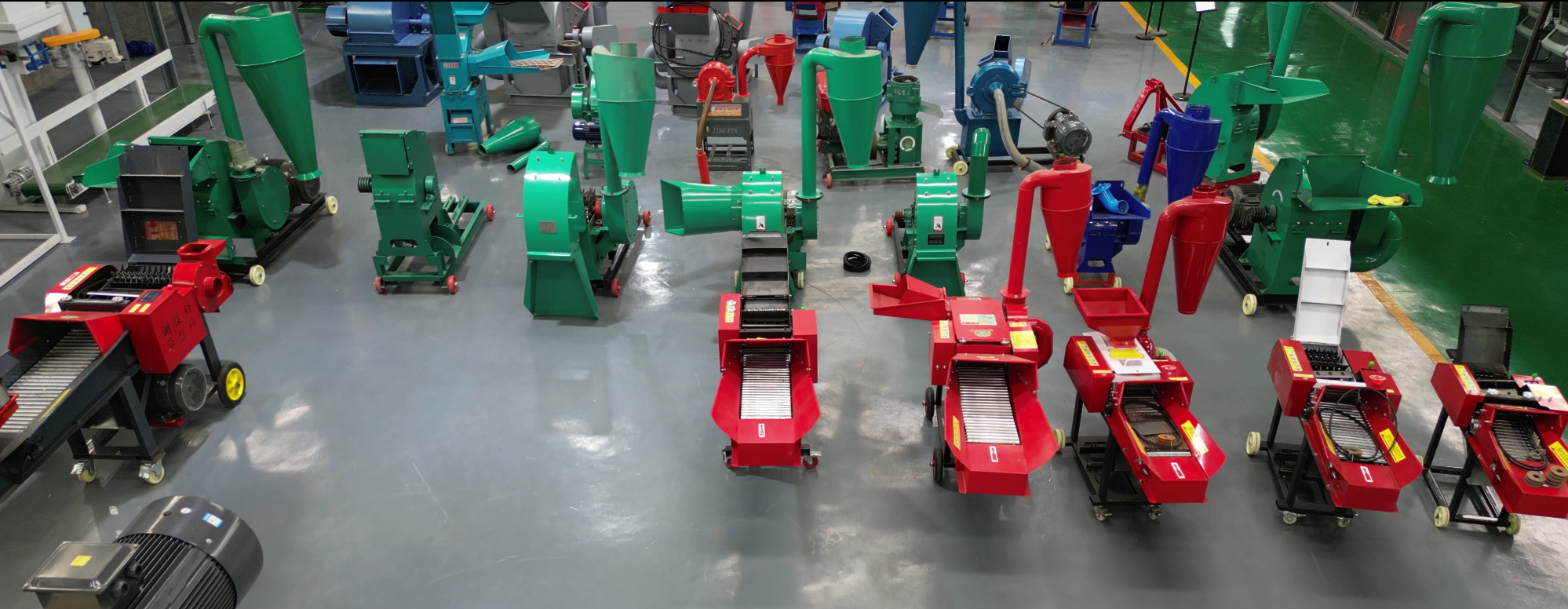
Chaff cutter machines are designed to handle both wet green fodder and dry straw, but real-world performance depends on the specific crop and moisture condition.
Why Material Condition Matters More Than Machine Category
A chaff cutter's job is simple in principle: a rotating blade drum or flywheel cuts material fed through a stationary hold-down. What changes between wet and dry fodder is the physical behaviour of the material itself.
Wet Fodder Characteristics
Wet green fodder — fresh grass, napier, sorghum, green maize, legumes — typically carries 65–80% moisture. It is soft but slippery and tends to:
- Stick to blades and chute surfaces
- Form clumps that bridge in the feed throat
- Require sharper blades to shear cleanly rather than tear
- Produce wet discharge that can pack in collection bins
Dry Fodder Characteristics
Dry straw, hay, and stover carry 10–18% moisture. They are lighter, more brittle, and more fibrous. They tend to:
- Float and scatter rather than feed smoothly
- Require positive hold-down pressure to prevent slipping
- Generate more dust and airborne fines
- Wear blades at a different rate than wet material
A machine that excels on dry straw may need a different feed technique on wet napier, and vice versa. This is why sample testing matters — it reveals how a specific model behaves on your specific material.
The Three FCN.FM Models at a Glance
All three models share the wet/dry rating, but they differ in motor power and throughput. Here is how they compare using the manufacturer's published specifications:
| Model | Line | Motor Power | Capacity | Wet/Dry Rating |
|---|---|---|---|---|
| Vertical Chaff Cutter Machine (2.8) | Chaff cutter machine | 4KW | 600–800 kg/h | Wet and dry material available |
| Horizontal Chaff Cutter Machine (2.8) | Chaff cutter | 4KW | 600–800 kg/h | Wet and dry material available |
| Vertical Chaff Cutter (3.8) | Chaff cutter | 5.5KW | 800–1500 kg/h | Wet and dry material available |
The 3.8 model's higher motor power (5.5KW vs 4KW) and wider capacity band (800–1500 kg/h) make it the natural choice for farms processing larger daily volumes or tougher, more fibrous material. The two 2.8 models suit small and medium farms with more modest throughput needs.
Sample-Testing Checklist: What to Verify Before You Buy
Before placing an order — or before accepting a distributor's demonstration — run the following five-point test using a representative sample of your actual fodder. Ten to fifteen minutes of testing will tell you more than any brochure.
1. Moisture Condition
Bring two samples: one at typical wet-fodder moisture (fresh-cut green material) and one at typical dry-fodder moisture (baled or stacked straw/hay). If your operation processes silage or high-moisture round-bale material, include that as well.
What to observe:
- Does the machine feed wet material without stalling or slipping?
- Does dry material feed continuously, or does it bunch and require constant pushing?
- Is there excessive material build-up on the blade housing or discharge chute?
2. Material Dimensions
Measure the typical stem diameter and length of the fodder you plan to process. Thick-stemmed crops (mature napier, maize stover, sugarcane tops) place more load on the blade than thin grasses.
What to observe:
- Does the machine accept the material without repeated jamming at the feed throat?
- Are long, fibrous stems cut cleanly or pulled through in uncut lengths?
- Is hold-down pressure sufficient for light, dry material that tends to lift?
3. Cutting Results
Collect the discharge and inspect it visually. Cut length uniformity affects intake, digestibility, and feed wastage.
What to observe:
- Is cut length consistent, or is there a mix of fine particles and long uncut strands?
- Are stems crushed and split (desirable for digestibility) or merely sliced?
- For wet material: is discharge clean, or does it form wet clumps?
- For dry material: is dust generation acceptable for your working environment?
4. Feeding Behaviour
Feeding behaviour determines how much labour the machine actually requires in daily use. A machine that needs constant manual pushing defeats the purpose of mechanisation.
What to observe:
- Does material self-feed under gravity, or does the operator need to push continuously?
- Is the feed throat wide enough for your typical bundle or armful size?
- Is there a risk of material kick-back or wrap-around at the feed roller?
- How many operators are needed to sustain rated throughput?
5. Measured Output
The manufacturer's rated capacity (600–800 kg/h for the 2.8 models, 800–1500 kg/h for the 3.8 model) is a reference figure. Actual output depends on material condition, operator skill, and crop type.
What to measure:
- Weigh a known quantity of input material.
- Run the machine for a fixed time (e.g. 10 minutes) at normal operating pace.
- Weigh the discharge.
- Calculate actual kg/h and compare against the rated range.
- Repeat for both wet and dry samples.
A machine that achieves 70–85% of rated capacity on your actual material is performing normally. Significant shortfalls suggest the material is tougher or wetter than the rating assumes, and a higher-capacity model may be warranted.
Video: Chaff cutter in operation — observe feed behaviour, cutting uniformity, and discharge condition when evaluating any machine.
Matching Daily Workload to Machine Capacity
Once you know your actual throughput on sample material, match it against your daily fodder requirement. Use this simple planning method:
Step 1: Calculate Daily Fodder Volume
Estimate total kg of fodder processed per day across all livestock groups. Include green fodder, dry roughage, and any silage or by-product material that passes through the cutter.
Step 2: Determine Available Working Hours
Decide how many hours per day the cutter will realistically run. Most small and medium farms operate a chaff cutter for 2–4 hours daily, often in one or two sessions.
Step 3: Apply a Utilisation Factor
Machines rarely run at 100% of rated capacity in farm conditions. Apply a realistic utilisation factor of 0.6–0.75 to the rated figure.
Worked example:
A dairy farm needs 1,200 kg of chopped fodder per day and plans to run the cutter for 3 hours.
- Required effective output: 1,200 ÷ 3 = 400 kg/h
- Vertical Chaff Cutter Machine (2.8) at 600–800 kg/h rated, × 0.7 utilisation = 420–560 kg/h effective — sufficient
- Vertical Chaff Cutter (3.8) at 800–1500 kg/h rated, × 0.7 utilisation = 560–1,050 kg/h effective — provides headroom for growth
Farms planning to expand herd size, add a second livestock species, or begin commercial fodder processing should size up rather than size exactly.
Wet vs Dry: Practical Operating Tips
Even a well-matched machine performs better with correct operating technique. A few field-tested practices:
For wet fodder:
- Feed in steady, moderate amounts rather than large armfuls to prevent bridging.
- Clean the blade housing and discharge chute at the end of each session to prevent fermentation residue build-up.
- Inspect blades more frequently — wet, silage-treated material can accelerate corrosion on cut edges.
For dry fodder:
- Feed material in a consistent orientation (stems aligned with feed direction) for more uniform cut length.
- Use the hold-down or feed roller positively to prevent light material from lifting over the blade.
- Consider a dust mask or working in a ventilated area if processing large volumes of dry straw.
For mixed operations:
- Process dry material first, then wet material, to reduce cleaning frequency between batches.
- Keep a log of output rates for each material type — this becomes valuable data for future capacity planning.
When to Confirm Specifications with the Manufacturer
The published specifications for the three FCN.FM models cover motor power, capacity, and wet/dry rating. However, several details that affect real-world performance are best confirmed directly with the manufacturer, especially for buyers with unusual crops or challenging material conditions:
- Blade material and hardness specification
- Recommended blade sharpening interval for your specific crop
- Feed throat dimensions and hold-down mechanism design
- Availability of alternative blade configurations for fibrous or thick-stemmed material
- Spare parts availability and lead times in your region
- OEM/ODM options if your operation needs a customised configuration
FCN.FM supports OEM and ODM customisation and provides technical guidance on machine selection, operation, and maintenance. Buyers with specific material conditions are encouraged to discuss their requirements before ordering.
Conclusion
All three FCN.FM chaff cutter models — the Vertical Chaff Cutter Machine (2.8), Horizontal Chaff Cutter Machine (2.8), and Vertical Chaff Cutter (3.8) — are rated for both wet and dry fodder. But a rating on paper is only the starting point. The real test is how a machine performs on your material, at your moisture levels, at your daily volume.
The five-point sample test outlined above — covering moisture condition, material dimensions, cutting results, feeding behaviour, and measured output — takes less than an hour and prevents costly mismatches. Combine it with a simple capacity calculation based on your daily workload, and you will have the information needed to choose confidently.
If you would like help interpreting your sample-test results, matching a model to your daily fodder volume, or arranging a demonstration, contact FCN.FM directly. The company's technical team can review your material conditions and recommend the most suitable configuration for your operation.
References
- FCN.FM — Vertical Chaff Cutter Machine (Model 2.8) product specifications: https://www.chaffcuttermachine.com
- FCN.FM — Horizontal Chaff Cutter Machine (Model 2.8) product specifications: https://www.chaffcuttermachine.com
- FCN.FM — Vertical Chaff Cutter (Model 3.8) product specifications: https://www.chaffcuttermachine.com