Introduction
For agricultural machinery distributors and importers, building a profitable chaff cutter product line is less about stocking every available model and more about curating a balanced range that matches the real needs of your regional market. A well-planned chaff cutter distributor product line should cover different farm sizes, power availability, and processing volumes — from smallholder operations that need a compact electric unit to commercial farms requiring higher-throughput machines. Getting this balance right reduces dead stock, improves turnover, and positions you as a trusted supplier rather than just a reseller. In this guide, we walk through how to structure your product range, what specifications matter most to end users, and how FCN.FM's vertical and horizontal chaff cutter models can serve as a practical stocking example for distributors entering or expanding in this category.
Understanding Your Market Before You Stock
Before placing a wholesale order, distributors should map out the actual operating conditions in their target region. Three factors dominate purchasing decisions for chaff cutters:
- Power availability: In regions with reliable grid electricity, electric chaff cutters dominate. In remote or off-grid farming areas, diesel engine or tractor-operated (PTO) models are preferred.
- Typical farm size: Smallholder farms processing under 500 kg/day need smaller capacity machines, while commercial livestock operations and feedlots require machines capable of 1,000 kg/h or more.
- Raw material type: Wet green fodder, dry straw, hay, and corn stalks each place different demands on blade design and motor power. Machines marketed as suitable for both wet and dry material offer greater flexibility and broader market appeal.
Distributors who skip this step often end up with inventory that sits unsold because the machines are either underpowered for commercial buyers or oversized for smallholder customers.
Structuring a Balanced Product Range
A practical chaff cutter product line typically covers three tiers:
| Tier | Target Customer | Capacity Range | Power Option |
|---|---|---|---|
| Entry / Smallholder | Small farms, backyard livestock | 300–800 kg/h | Electric (3–4 kW) |
| Mid-Range / Commercial | Medium livestock farms, feed traders | 800–1,500 kg/h | Electric (5.5 kW+) |
| Heavy Duty / Industrial | Feedlots, silage contractors, feed mills | 1,500+ kg/h | Diesel, PTO, or high-power electric |
Covering all three tiers ensures you can serve walk-in smallholders and commercial buyers without losing either segment. It also allows natural upselling — a customer who outgrows an entry-level machine has a clear upgrade path within your catalogue.
Vertical vs. Horizontal Configuration
Within each capacity tier, distributors should also consider offering both vertical and horizontal chaff cutter configurations:
- Vertical chaff cutters have a compact footprint and are generally easier to load from the top. They suit farms with limited floor space.
- Horizontal chaff cutters offer a lower feed height and are often preferred for continuous feeding of long straw and hay, where operators feed material along a horizontal table.
Offering both configurations at the same capacity tier gives customers choice without requiring you to stock an entirely separate capacity range.
A Stocking Example Using FCN.FM Models
To make this concrete, consider how FCN.FM's current chaff cutter range maps to a distributor's mid-range stocking plan:
Entry to Mid-Range: Model 2.8 (Vertical and Horizontal)
FCN.FM offers both a vertical chaff cutter machine (model 2.8) and a horizontal chaff cutter machine (model 2.8), both rated at:
- Motor power: 4KW
- Capacity: 600-800kg/h
- Suitable for both wet and dry material, with high efficiency and easy operation
These machines are well-suited as the entry point in a distributor's product line. They cover smallholder and small commercial farms processing green fodder, dry straw, or hay. Stocking both the vertical and horizontal versions of the 2.8 model lets you address different customer preferences at the same price and capacity point.
Mid to Upper-Range: Model 3.8 Vertical Chaff Cutter
For customers needing higher throughput, FCN.FM's vertical chaff cutter (model 3.8) offers:
- Motor power: 5.5KW
- Capacity: 800-1500kg/h
- High efficiency, easy operation, wet and dry material available
This model serves medium commercial farms and feed traders who need to process larger daily volumes. It naturally sits above the 2.8 models in your catalogue and provides a clear upgrade path.
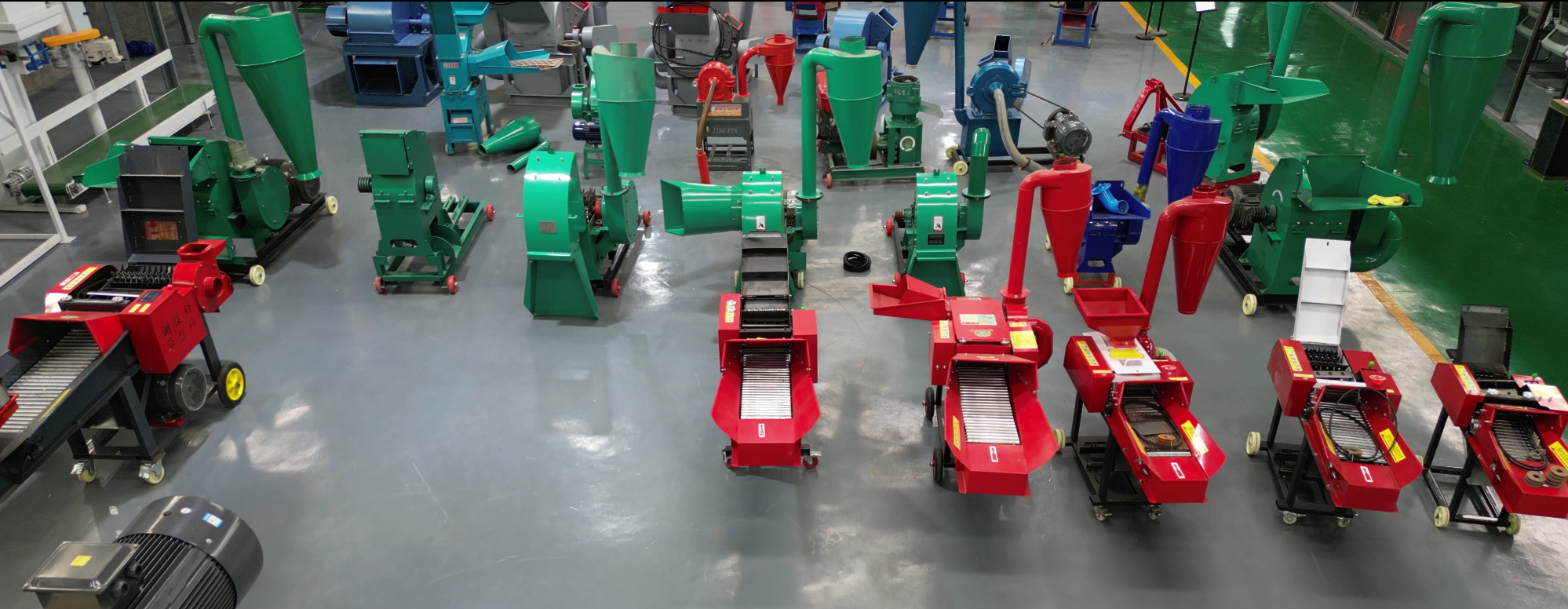
FCN.FM chaff cutter machines are designed for efficient processing of both wet and dry fodder materials.
Together, these three models — 2.8 vertical, 2.8 horizontal, and 3.8 vertical — form a compact but complete mid-range product line covering 600 kg/h to 1,500 kg/h. For distributors targeting regions with a high proportion of small and medium farms, this range alone can cover the majority of demand.
Watch FCN.FM chaff cutter machines in operation processing green and dry fodder.
Key Specifications to Communicate to Your Customers
When marketing chaff cutters, distributors should be prepared to answer detailed technical questions. The specifications that most influence purchase decisions include:
- Motor power (kW): Determines the machine's ability to handle tough, fibrous, or wet material without stalling.
- Processing capacity (kg/h): Should be matched honestly to the customer's daily volume needs. Overstating capacity leads to dissatisfaction.
- Wet/dry material compatibility: A machine that handles both expands its usefulness across seasons.
- Cutting length adjustability: Many farmers want control over chop length for different livestock types.
- Blade material and replaceability: Blades are the primary wear part. Confirm that replacement blades are available locally or through your supply channel.
- Safety features: Feed guards, emergency stops, and stable mounting are important for operator safety and regulatory compliance in many markets.
For any specification not listed in a manufacturer's standard datasheet — such as exact cutting length range, noise level, or machine weight — distributors should request written confirmation from the manufacturer rather than relying on estimates.
Export, Certification, and After-Sales Considerations
For international distributors, the product line decision extends beyond machine specifications. Before finalising a wholesale order, clarify the following with your supplier:
- Export documentation: Commercial invoice, packing list, bill of lading, and certificate of origin should be provided as standard.
- Electrical compliance: Confirm motor voltage and frequency options (e.g., 220V/50Hz, 380V/50Hz, or 220V/60Hz) match your market's grid standard.
- Warranty terms: Understand what is covered, for how long, and which parts are classified as consumables versus warranty items.
- Spare parts availability: Blades, belts, and bearings should be available as replacement parts. Ask about spare parts kits that can be shipped with the initial order.
- Packaging: Machines should be securely packed for sea or land freight, ideally in export-grade wooden cases or crated packaging.
FCN.FM supports OEM and ODM customisation, which means distributors can also discuss branding, colour schemes, and configuration adjustments to better suit local market preferences.
Conclusion
Building a successful chaff cutter product line as a distributor comes down to matching machine capacity, power options, and configuration to the real conditions of your market. A focused range — such as FCN.FM's 2.8 vertical and horizontal models paired with the higher-capacity 3.8 vertical chaff cutter — gives you coverage from 600 kg/h to 1,500 kg/h without over-extending your inventory budget. Combined with clear technical documentation, appropriate export arrangements, and reliable spare parts support, this approach positions you to serve smallholder and commercial customers alike. If you are an importer or distributor looking to develop a chaff cutter product line for your region, contact FCN.FM to discuss model selection, wholesale pricing, and OEM options tailored to your market.
References
- FCN.FM Chaff Cutter Machine product information: https://www.chaffcuttermachine.com/
- FAO – Agricultural Machinery and Equipment: http://www.fao.org/
- ISO – Standards for Agricultural Machinery: https://www.iso.org/