Chaff Cutter Export Orders: A Pre-Shipment Checklist for Importers and Distributors
Placing an order for chaff cutters is only half the job. The other half — making sure the machines that arrive at your warehouse are exactly the machines you agreed to buy — depends on how carefully you manage the pre-shipment stage. A structured chaff cutter export checklist helps importers, wholesalers and distributors catch specification errors, packing mistakes and documentation gaps before the goods leave the factory, when corrections are still cheap and fast. This guide walks through the six areas every buyer should verify before a chaff cutter shipment is released: order identification, electrical and mechanical specifications, inspection evidence, packing details, manuals and documentation, and destination-specific import requirements.
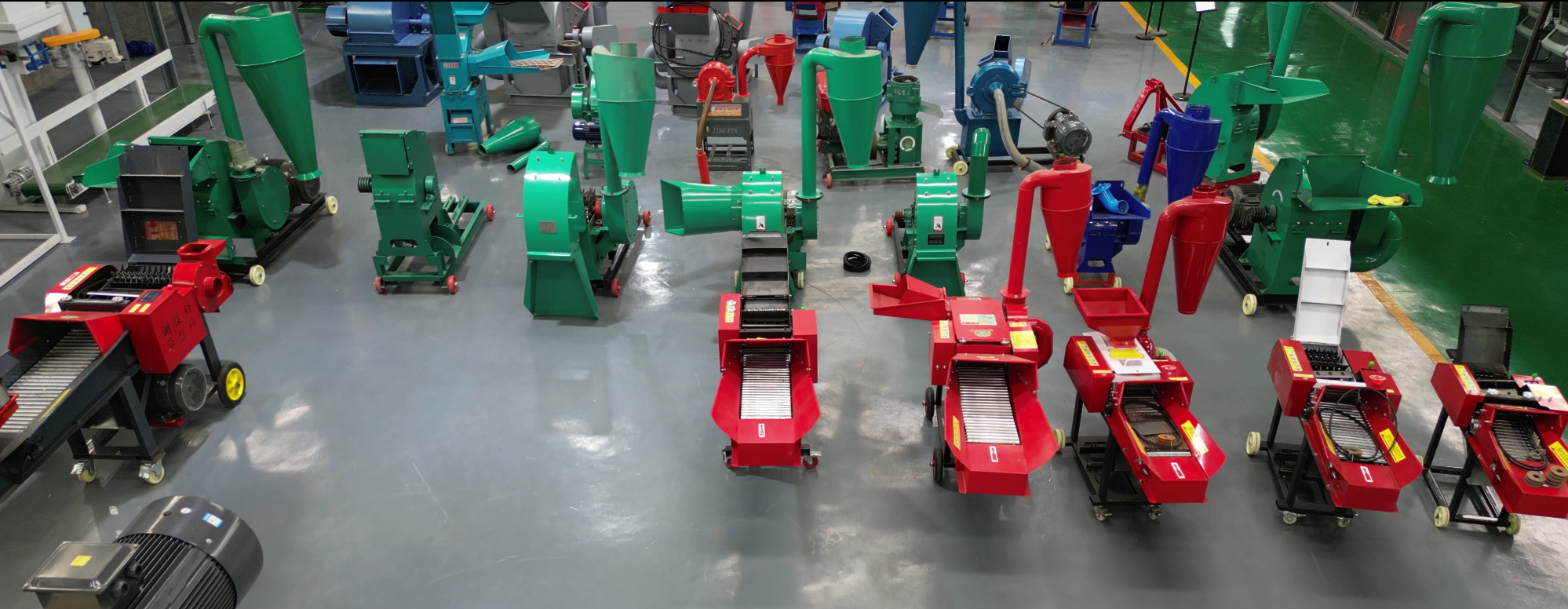
Chaff cutter machines prepared for international shipment.
1. Confirm Order Identification and Shipment Reconciliation
Before anything else, reconcile the physical shipment against the signed purchase order. This is the single most common source of disputes in agricultural machinery exports.
Match Machine Models and Quantities
Check that every unit in the shipment matches the model numbers on the order. For example, if you ordered a vertical chaff cutter machine (model 2.8) with a 4KW motor and 600-800kg/h capacity, confirm that the serial plates on the shipped units show the same model designation. Mixing up the vertical 2.8 model with the horizontal 2.8 model — both rated at 4KW and 600-800kg/h but with different machine configurations — is an easy error to make on a busy production floor and an expensive one to fix after arrival.
Verify Commercial Invoice Details
Your commercial invoice should list:
- Supplier name and address
- Buyer name, address and import licence number (where applicable)
- Full model descriptions and quantities
- Unit prices and total contract value
- Currency and payment terms
- Incoterms (e.g. FOB, CIF, EXW) and named port or place
- Country of origin
- HS codes for each product line
Reconcile every line item against the signed order. A mismatch between the invoice and the order — even a small one in quantity or model description — can delay customs clearance at destination.
2. Verify Agreed Electrical and Mechanical Specifications
Chaff cutters are supplied in different power configurations, and the wrong specification can make a machine unusable in your market.
Electrical Specifications
Confirm in writing before shipment:
- Voltage and frequency — e.g. 220V/50Hz, 380V/50Hz, or 220V/60Hz, matched to your destination grid
- Motor power — for example, the vertical chaff cutter (model 3.8) is rated at 5.5KW with a capacity of 800-1500kg/h
- Plug type — destination-specific plug standards vary widely
- Cable length and earth continuity
If your market uses 60Hz supply, confirm that motor ratings have been adjusted accordingly. A 50Hz motor run on 60Hz will overspeed and may overheat.
Mechanical and Performance Specifications
For each model, confirm:
- Cutting capacity (kg/h) at the agreed moisture content
- Cutting length range
- Wet and dry material capability — the FCN.FM vertical and horizontal chaff cutter models (2.8) are both rated for wet and dry material
- Feed hopper dimensions
- Blade material and quantity
- Machine weight and footprint
Chaff cutter working — a useful reference when confirming cutting performance before shipment.
3. Request Inspection Evidence Before Release
Do not rely on photographs alone. Ask the manufacturer for structured inspection evidence that you can file against the order.
Factory Inspection and Testing
A reasonable pre-shipment inspection package should include:
- Run test video — each unit operating under load, showing the motor starting, the cutter running and material being processed
- No-load current measurement — confirms the motor is drawing current within expected range
- Dimensional check — confirms machine dimensions and hopper size against the specification sheet
- Paint and finish check — photographs of all four sides plus the base and any welded joints
- Serial number record — a list linking serial numbers to models, so you can trace units after arrival
Third-Party Inspection (Optional)
For larger orders, many importers engage a third-party inspection agency to carry out an on-site check before the container is sealed. If you choose this route, agree the inspection scope in advance — typically quantity, model, workmanship, packing and marking — and specify the acceptance criteria in your purchase order.
4. Confirm Packing Details and Container Loading
Packing failures cause more transit damage claims in the agricultural machinery trade than any other single cause. Confirm the following before the container is loaded.
Packing Method
- Inner packing — machines are typically wrapped in plastic film and fitted with foam corner protectors
- Outer packing — plywood cases or cartons, depending on the model and shipping route
- Palletisation — confirm whether units are palletised or loaded loose
- Blade protection — cutting blades should be separately wrapped or removed and boxed to prevent damage to the machine body and injury to handlers
Container Loading Plan
For full container loads, request a loading plan showing:
- Number of units per container
- Machine orientation and stacking arrangement
- Total gross weight and volume
- Container type and size (20ft, 40ft, 40ft HQ)
- Lashing and securing method
For less-than-container-load (LCL) shipments, confirm that each unit is packed in its own case and clearly marked with your consignment details.
Marking and Labelling
Every case should carry:
- Consignee name and destination port
- Purchase order number
- Case number (e.g. 1 of 12)
- Gross and net weight
- Handling symbols (fragile, this way up, keep dry)
- Model number and serial number
5. Check Manuals, Spare Parts and Documentation
The paperwork that travels with the machines is as important as the machines themselves.
Operating and Maintenance Manuals
Confirm that each machine is supplied with:
- An operating manual in your required language (English is standard for export; other languages can usually be arranged)
- A parts list with exploded diagrams
- A wiring diagram for electric models
- A recommended maintenance schedule
- Blade sharpening and replacement instructions
Spare Parts
Discuss a spare parts package at the time of order, not after arrival. A typical starter package for a chaff cutter order includes:
- A set of spare cutting blades
- Drive belts (where applicable)
- Bearings
- Fuses and contactors for electric models
- Any special tools required for blade removal
6. Reconcile Destination-Specific Import Requirements
Import rules differ significantly between markets, and the exporter cannot be expected to know the requirements of every destination. This is the buyer's responsibility — but it must be done before shipment, not after the goods arrive.
Work With Your Customs Broker
Before the shipment is released, confirm with your customs broker:
- HS classification and duty rate for chaff cutters in your country
- Required import licences or permits
- Certificate of origin requirements — some markets require a specific format (e.g. Form E for ASEAN, EUR.1 for certain European agreements)
- Electrical safety certification — some markets require CE marking, others require local electrical approval
- Labelling requirements — including any mandatory warning labels or energy efficiency labels
- Pre-shipment inspection requirements — some governments require inspection by an appointed agency before shipment
- Port and customs procedures — including any restrictions on used or refurbished machinery
Final Document List
As a minimum, the exporter should provide the following document set with the shipment:
| Document | Purpose |
|---|---|
| Commercial invoice | Customs valuation and payment |
| Packing list | Quantity and weight verification |
| Bill of lading / air waybill | Title to goods and transport contract |
| Certificate of origin | Preferential duty treatment where applicable |
| Insurance certificate | Cargo cover (if CIF or CIP) |
| Inspection certificate | Quality confirmation (if required) |
| Operating manual | End-user documentation |
| Spare parts list | After-sales support |
Confirm the document set in your purchase order so there is no ambiguity at the time of shipment.
Final Pre-Shipment Review
A disciplined pre-shipment review takes a few hours and prevents weeks of delay. Before you authorise shipment:
- Reconcile the packing list against the signed order — model, quantity, price, Incoterms
- Confirm electrical specifications match your destination grid
- Review inspection evidence — run test video, serial number record, photographs
- Approve the packing method and container loading plan
- Confirm manuals, spare parts and documentation are included
- Verify destination import requirements with your customs broker
- Confirm the final document set is complete
Importers and distributors who follow a structured chaff cutter export checklist consistently report fewer claims, faster customs clearance and better long-term supplier relationships. If you are sourcing chaff cutters, fodder processing equipment or animal feed machinery for your market and would like support with specifications, OEM requirements or export documentation, the FCN.FM team is available to help — contact us to discuss your requirements.