Goats and sheep are selective, efficient grazers, but their digestive systems perform best when roughage is chopped into short, uniform lengths before feeding. A well-chosen chaff cutter for goats and sheep turns long straw, hay, green fodder and silage into palatable, easy-to-chew material that reduces sorting waste and improves intake. For most small-ruminant operations, the real question is not whether to chop, but how much material you need to process each day — and which machine capacity matches that workload without over- or under-investing.
This guide walks through realistic daily fodder volumes for goats and sheep, explains why chopping improves palatability, and shows how a 4KW chaff cutter rated at 600–800kg/h can serve a typical farm. A simple planning worksheet at the end helps you size the machine to your own herd.
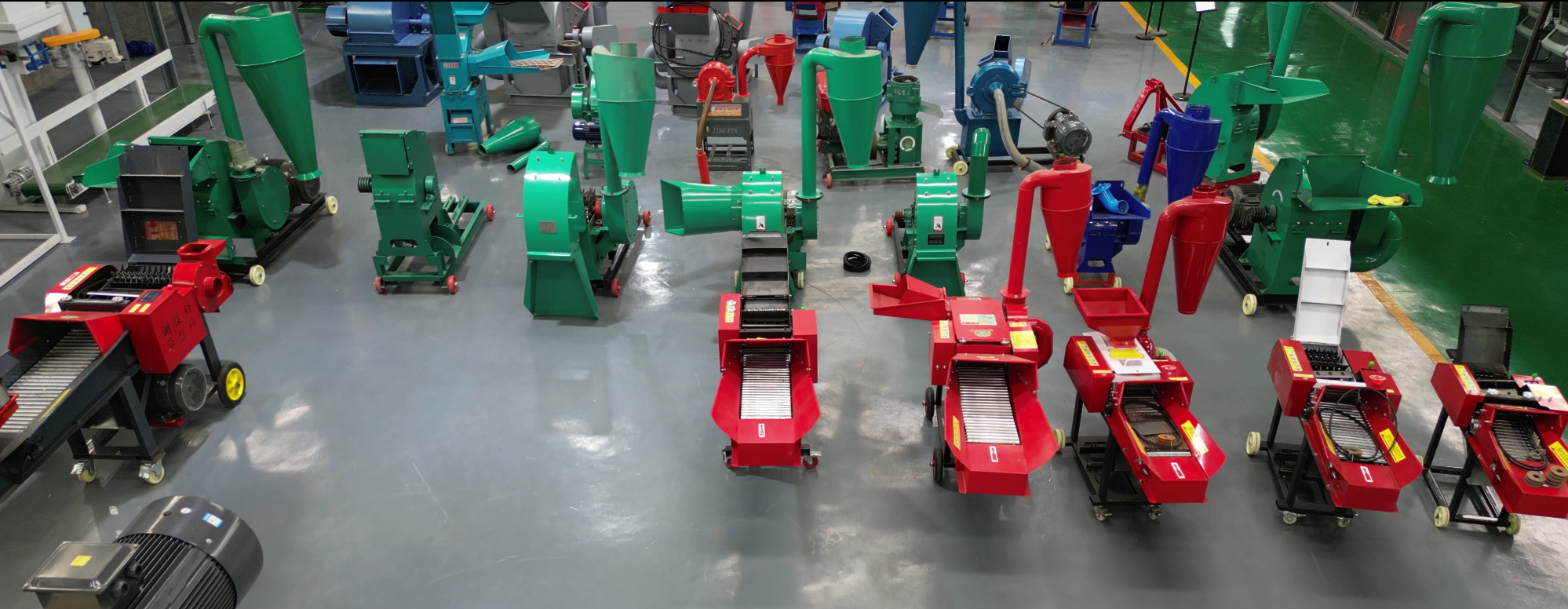
Electric chaff cutter chopping straw and green fodder into short, uniform lengths for small ruminants.
Why Chopping Matters for Goats and Sheep
Goats and sheep are both ruminants, but they behave differently at the feed bunk. Goats in particular are browsers and notorious sorters — given long-stemmed hay or straw, they pick out leaves and grain heads and leave the coarse stems behind. That rejected material is still paid for, still handled, and still occupies storage.
Chopping addresses several problems at once:
- Higher intake. Short, soft chaff is easier to chew and swallow, so animals eat more of what is offered, especially young, old or convalescing animals.
- Less sorting and waste. When stems, leaves and additives (mineral mix, molasses, concentrate) are mixed into chopped fodder, selective feeding drops sharply.
- Better silage and TMR mixing. Uniform chop length lets a chaff cutter for silage produce material that compacts well in a pit or bag and blends evenly with concentrates.
- Safer swallowing. Long, fibrous strands are a known cause of choke in sheep; chopping to a few centimetres reduces that risk.
- Easier handling and mechanisation. Chopped material flows through mixers, conveyors and feed carts far more reliably than long straw.
The trade-off is that chopping costs energy and time. That is exactly why matching machine capacity to daily workload matters.
Daily Fodder Volumes for Small Ruminants
Roughage intake for goats and sheep is usually expressed as a percentage of body weight on a dry-matter (DM) basis. A practical working range is 2–4% of body weight in DM per day, with the lower end for maintenance on good pasture and the higher end for lactating does/ewes or animals with limited grazing access.
Because fresh fodder and silage carry moisture, the as-fed weight you actually run through the machine is much higher than the DM figure. The table below uses typical moisture levels to convert DM needs into the wet weight you must chop each day.
| Animal | Typical BW (kg) | DM roughage/day (kg) | Dry hay as-fed (kg) | Silage (~65% moisture) as-fed (kg) | Green fodder (~80% moisture) as-fed (kg) |
|---|---|---|---|---|---|
| Adult goat (maintenance) | 40 | 0.8–1.2 | 0.9–1.3 | 2.3–3.4 | 4.0–6.0 |
| Lactating doe | 50 | 1.5–2.0 | 1.7–2.2 | 4.3–5.7 | 7.5–10.0 |
| Adult sheep (maintenance) | 60 | 1.2–1.8 | 1.3–2.0 | 3.4–5.1 | 6.0–9.0 |
| Lactating ewe | 70 | 1.8–2.5 | 2.0–2.8 | 5.1–7.1 | 9.0–12.5 |
| Growing lamb/kid | 25 | 0.5–0.8 | 0.6–0.9 | 1.4–2.3 | 2.5–4.0 |
Values are planning estimates. Actual intake varies with breed, production stage, pasture availability and the rest of the ration.
A Worked Example: 100-Head Goat Farm
Consider a 100-goat farm with a mix of maintenance does and some lactating animals, averaging roughly 1.5kg DM of roughage per head per day:
- Total DM roughage: 100 × 1.5 = 150kg DM/day
- If fed mainly as dry hay/straw (~12% moisture): ≈ 170kg as-fed/day
- If fed partly as silage (~35% DM): a 50/50 DM split gives ≈ 85kg hay + 215kg silage ≈ 300kg as-fed/day
- If green fodder is the base: ≈ 600–750kg as-fed/day
That single farm can need anywhere from under 200kg to over 700kg of as-fed material per day depending on the ration — a wide range that directly determines the machine you need.
Matching Machine Capacity to Daily Workload
Chaff cutter capacity is normally quoted in kg/hour of as-fed material, and it changes with the crop, moisture and cut length. FCN.FM's vertical and horizontal chaff cutter machines in the 2.8 model line are rated as follows:
- Motor power: 4KW
- Capacity: 600–800kg/h
- Material: high efficiency, easy operation, wet and dry material available
A larger 3.8 model vertical chaff cutter is also available at 5.5KW / 800–1500kg/h for farms that need more throughput.
What 600–800kg/h Means in Practice
At the rated range, a 4KW unit processing 600kg/h needs about one hour to handle 600kg of as-fed fodder. Mapping that to the example farm:
| Daily as-fed volume | Time on a 600kg/h machine | Time on an 800kg/h machine |
|---|---|---|
| 200kg (dry hay ration) | ~20 min | ~15 min |
| 300kg (hay + silage mix) | ~30 min | ~23 min |
| 600kg (green fodder base) | ~60 min | ~45 min |
| 800kg (large green-fodder operation) | ~80 min | ~60 min |
For a 100-head goat or sheep farm on a hay or hay-plus-silage ration, a 4KW machine running 20–30 minutes a day is comfortably sized, with headroom for peak days, wetter material or herd growth. Operations processing green fodder as the main ration, or farms above roughly 200 head, should look at the 5.5KW / 800–1500kg/h model to keep daily chopping under an hour.
Chaff cutter in operation — wet and dry fodder processed into short, even chaff.
Choosing Between Wet and Dry Fodder Processing
A key advantage of the 4KW models is that they handle wet and dry material on the same machine. That flexibility matters on mixed farms:
- Dry material (straw, hay, stover) is light and fibrous. It chops quickly but is dusty; a covered intake and good blade condition keep output uniform.
- Wet material (green fodder, silage, soaked beet pulp) is heavier per bucket but can clog a machine that is not designed for moisture. A wet-and-dry capable cutter keeps throughput stable across the ration.
- Silage making: for a chaff cutter for silage, aim for a chop length that compacts well — typically short enough to exclude air but not so fine that it loses effective fibre. Consistent blade sharpness and a stable feed rate produce the most uniform chop.
Cut length is usually adjustable by changing the number of blades or the feed roller speed. Confirm the available cut-length settings for your model with the manufacturer before ordering, especially if a specific chop length is required for your silage or TMR system.
A Simple Daily Feed Planning Worksheet
Use this worksheet to size a chaff cutter to your own operation. Fill in each line and compare the result with the capacity table above.
Step 1 — Herd inventory
| Line | Your numbers |
|---|---|
| Number of adult goats/sheep (maintenance) | __ |
| Number of lactating females | __ |
| Number of growing lambs/kids | __ |
| Average body weight per class (kg) | __ |
Step 2 — Daily DM roughage requirement
| Class | Head count | DM/head/day (kg) | Class DM total (kg) |
|---|---|---|---|
| Maintenance adults | 1.0 | ||
| Lactating females | 1.8 | ||
| Growing young stock | 0.65 | ||
| Total DM/day | __ |
Step 3 — Convert to as-fed weight by ration type
| Main roughage source | Approx. moisture | As-fed factor | Daily as-fed (kg) |
|---|---|---|---|
| Dry hay / straw | ~12% | ×1.15 | |
| Silage | ~65% | ×2.9 | |
| Green fodder | ~80% | ×5.0 | |
| Mixed (enter your own blend) | — | — |
Step 4 — Machine sizing
| Daily as-fed (kg) | ÷ 600kg/h | ÷ 800kg/h | Recommended model |
|---|---|---|---|
| __ | __ h | __ h | 4KW (600–800kg/h) if ≤ ~1h/day |
| __ | __ h | __ h | 5.5KW (800–1500kg/h) if > ~1h/day |
Rule of thumb: if your daily as-fed volume keeps the machine running under about one hour per day, the 4KW / 600–800kg/h model is usually the economical choice. If you are consistently above an hour, or plan to expand the herd, step up to the 5.5KW / 800–1500kg/h model.
Selection Criteria Beyond Capacity
Capacity is only part of the decision. When comparing a chaff cutter for goats and sheep, also weigh:
- Wet/dry capability — essential if your ration switches between green fodder, silage and dry straw across the year.
- Cut-length adjustability — shorter chop for silage and TMR, slightly longer for hay-based rations.
- Power supply — confirm the 4KW motor matches your available single- or three-phase supply, or specify a diesel-driven variant where grid power is unreliable.
- Blade material and serviceability — industry-grade hardened blades that can be sharpened or replaced locally reduce downtime.
- Safety features — a guarded feed throat and an emergency stop are non-negotiable for daily farm use.
- Footprint and mobility — a compact, movable unit suits farms that chop at the barn rather than a fixed feed-mixing room.
- OEM/ODM options — importers and distributors can specify motor, colour, branding and configuration to suit their market.
Conclusion
For most goat and sheep farms, the daily fodder volume — not the herd size alone — is what should drive the chaff cutter decision. A 4KW machine rated at 600–800kg/h covers a typical 100-head operation on a hay or hay-plus-silage ration in well under an hour a day, while larger green-fodder or silage-based programs are better served by the 5.5KW / 800–1500kg/h model. Work through the worksheet with your own head counts and ration, and you will land on a machine that matches the workload rather than guessing.
If you are unsure which capacity fits your farm or your customers' farms, the FCN.FM team can review your herd numbers and ration, recommend the right model, and quote OEM/ODM configurations for your market. Get in touch for a tailored capacity recommendation and current export pricing.
References
- FCN.FM — Vertical Chaff Cutter Machine (2.8 model, 4KW, 600–800kg/h): https://www.chaffcuttermachine.com/
- FCN.FM — Horizontal Chaff Cutter Machine (2.8 model, 4KW, 600–800kg/h): https://www.chaffcuttermachine.com/
- FCN.FM — Vertical Chaff Cutter (3.8 model, 5.5KW, 800–1500kg/h): https://www.chaffcuttermachine.com/
- FAO — Feed intake and ration planning for small ruminants: https://www.fao.org/
- Extension guidance on small-ruminant nutrition and forage use: https://extension.psu.edu/