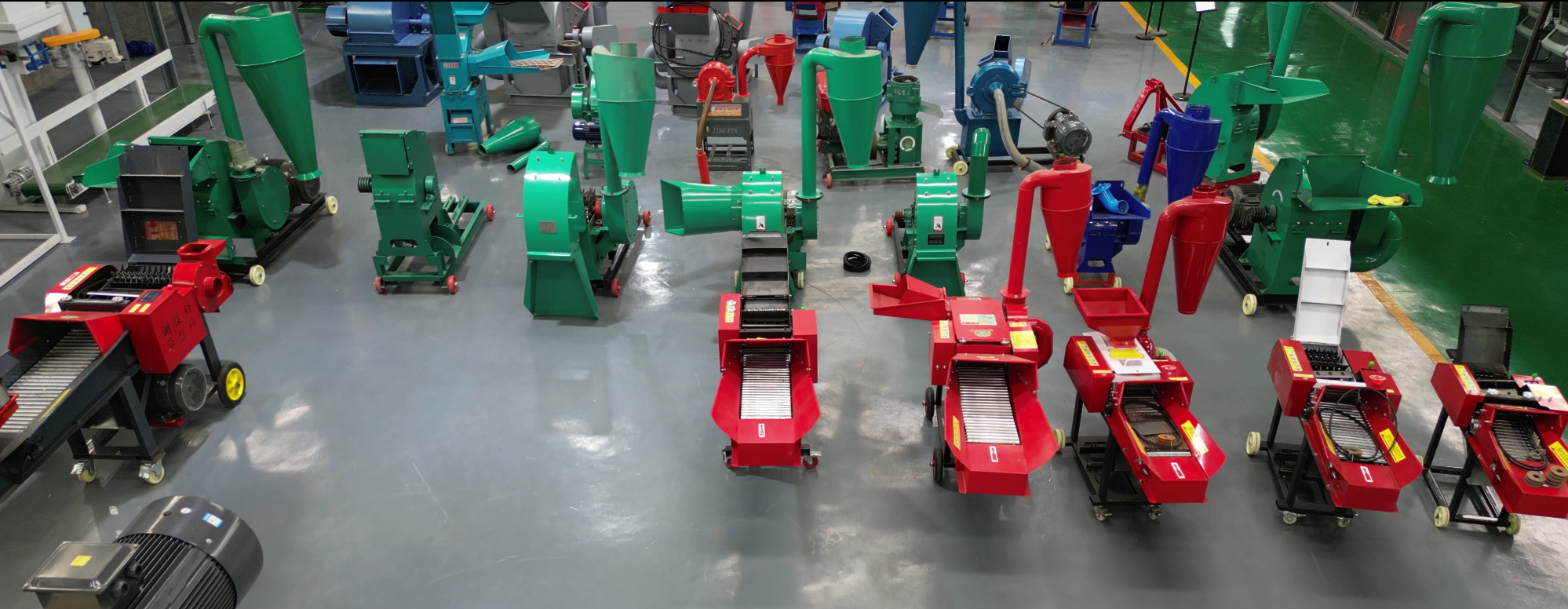
Chaff cutter machine processing green and dry fodder on a livestock farm.
A chaff cutter that suddenly produces less chopped fodder than it used to is one of the most common complaints we hear from livestock farms and feed processors. The machine still runs, the motor still hums, but the pile of finished chaff at the discharge outlet keeps getting smaller. This problem — chaff cutter low output — rarely has a single cause. In most cases it is the result of material condition, feeding technique, cutting-component wear, or an electrical supply issue, and it can usually be diagnosed with a structured check rather than an expensive part replacement.
This guide walks through the most frequent reasons a chaff cutter falls below its rated capacity, how to confirm the real output figure before calling for support, and the safe isolation steps to follow before any inspection.
Understanding Rated Capacity vs. Real-World Output
Every chaff cutter is rated for a processing capacity under defined conditions. For example, the FCN.FM vertical chaff cutter machine (model 2.8) is rated at 600-800kg/h with a 4KW motor, and the larger vertical chaff cutter (model 3.8) is rated at 800-1500kg/h with a 5.5KW motor. Both are designed for high efficiency and easy operation, and both handle wet and dry material.
These figures assume:
- Material of a typical moisture content and length
- A steady, consistent feed rate
- Sharp cutting blades in good condition
- A stable power supply at the rated voltage
When any one of these assumptions breaks down, actual throughput drops below the nameplate number. Understanding this gap is the first step in troubleshooting chaff cutter low output — the machine is often healthy, but one of the operating conditions has changed.
Troubleshooting Table: Common Causes of Low Output
Use the table below to narrow down the cause. Work from the simplest and safest checks first.
| Symptom / Observation | Likely Cause | What to Check |
|---|---|---|
| Output drops only with wet, fibrous or long material | Material condition | Moisture content, material length, tangling or wrapping around the rotor |
| Output fluctuates; operator feeds by hand in bursts | Inconsistent feeding | Feed rate uniformity, overloading then starving the rotor |
| Output gradually declines over weeks of use | Cutting component wear | Blade sharpness, blade edge damage, blade-to-blade or blade-to-anvil clearance |
| Motor slows under load, lights dim, breaker trips | Power supply issue | Supply voltage, cable size and length, loose terminals, overloaded circuit |
| Output fine but machine vibrates or noises change | Mechanical looseness | Fasteners, belt tension (if belt-driven), bearing condition |
| Sudden drop after a jam was cleared | Residual blockage | Material packed in the cutting chamber or discharge chute |
Cause 1: Material Condition
Material is the single biggest variable in chaff cutter performance. Green fodder, dry straw, hay and silage all behave differently in the cutting chamber.
- Excess moisture makes fibrous material stringy, so it wraps around the rotor and blades instead of being sheared cleanly. This reduces the effective cutting area and lowers output.
- Overly dry, brittle straw can shatter unevenly and may need a second pass, effectively halving throughput.
- Long, unpre-cut material forces the blades to work harder per strand. Cutting material to a manageable length before feeding often restores rated capacity.
- Foreign objects — stones, wire, soil clods — dull blades quickly and can cause sudden output loss.
Matching the machine to the material matters. Both the model 2.8 and model 3.8 vertical chaff cutters are specified for wet and dry material, but very high-moisture silage or heavily tangled hay will always process slower than clean, pre-cut straw.
Cause 2: Inconsistent Feeding
Chaff cutters are designed for a steady feed rate. Feeding in large handfuls followed by pauses starves the rotor, then overloads it. The result is a motor that surges and slows, and an average output well below the rated figure.
Best practice:
- Feed material in a continuous, even stream rather than in bunches.
- Do not force-feed or pack material into the throat — let the blades pull it in.
- Keep the feed hopper supplied but not overloaded.
- For tractor-operated or larger units, match PTO or feed speed to material density.
A simple test: run the machine on a known, uniform material and feed at a deliberate, steady pace for five minutes. If output recovers, feeding technique was the cause.
Cause 3: Cutting Component Wear
Blade condition has a direct, measurable effect on output. Dull or damaged blades crush and tear rather than shear, which slows processing, increases motor load and produces a coarser, uneven cut.
Inspect the chaff cutter blade set for:
- Rounded or rolled edges — the most common sign of normal wear
- Nicks and chips from stones, metal or hard foreign objects
- Uneven wear across multiple blades, which unbalances the rotor
- Incorrect clearance between the blade and the fixed anvil/knife — too large a gap leaves material uncut
Blade sharpening or replacement at the correct angle, and resetting the blade-to-anvil clearance to the manufacturer's specification, typically restores output quickly. Always use blades matched to the machine model; incorrect blade geometry reduces both output and cut quality.
Cause 4: Power Supply Issues
An electric chaff cutter is sensitive to supply quality. A motor rated at 4KW or 5.5KW needs adequate voltage and current at the machine terminals. Undervoltage — common on long cable runs, shared farm circuits or weak rural supplies — causes the motor to draw more current, run hot and lose torque, which shows up directly as low output.
Check:
- Supply voltage at the machine, not just at the distribution board
- Cable cross-section and total run length (undersized or very long cables cause voltage drop)
- Tight, clean electrical connections and terminals
- That the circuit is not shared with other heavy loads
- Correct breaker/fuse rating for the motor
If the motor slows noticeably under load or thermal protection trips repeatedly, a power supply problem is likely and should be resolved before the machine is used further.
How to Document Output for a Support Request
If output remains low after the checks above, good documentation makes remote technical support far faster and more accurate. Before contacting the manufacturer, record the following:
- Material weight in and chaff weight out. Weigh a batch of raw material before feeding and weigh the finished chaff collected over a fixed period.
- Operating time. Note the exact run time for the test (for example, 10 minutes) so output can be calculated in kg/h.
- Material type and condition. Species, wet or dry, approximate moisture, and whether it was pre-cut.
- Machine model and motor rating. For example, vertical chaff cutter model 2.8, 4KW, rated 600-800kg/h.
- Measured supply voltage at the machine during operation.
- Blade condition and service history — when blades were last sharpened or replaced.
- Photos or video of the material, the discharge output and the blade set.
A worked example: if 12kg of dry straw is processed in 10 minutes, output is roughly 72kg/h — far below a 600-800kg/h rating. That single measurement, combined with material type and voltage, tells a support engineer whether the cause is likely material, blades or power.
Chaff cutter in normal operation — note the steady feed rate and continuous discharge that produce rated output.
Safety First: Isolate Before You Inspect
All inspection and maintenance on a chaff cutter must be performed only after the machine is safely isolated. Cutting components are extremely dangerous and can cause severe injury.
Before opening any guard or reaching into the cutting chamber:
- Switch off and disconnect the power supply at the plug or isolator — do not rely on the stop button alone.
- Lock off and tag the isolator so nobody can restart the machine while work is in progress.
- Wait for the rotor to come to a complete stop and confirm it is stationary before removing guards.
- Release stored energy — for belt-driven units, ensure the belt cannot move the rotor.
- Wear cut-resistant gloves when handling blades, and use the correct tools for blade removal and refitting.
- Never attempt to clear a jam or inspect blades while the machine is connected to power.
Only once the machine is isolated, stopped and verified should blade inspection, clearance adjustment or blockage removal begin. If you are not trained or confident, contact the manufacturer or a qualified technician.
Preventing Low Output in the Long Term
A short maintenance routine prevents most output problems before they start:
- Inspect and sharpen or replace blades at regular intervals based on usage hours and material abrasiveness.
- Check blade-to-anvil clearance after every blade change.
- Keep the cutting chamber and discharge chute clear of packed material.
- Verify supply voltage periodically, especially on long cable runs.
- Train operators on steady feeding technique.
- Keep a log of output tests so a gradual decline is caught early.
Conclusion
Chaff cutter low output is almost always traceable to one of four areas: the material being processed, the way it is fed, the condition of the cutting blades, or the quality of the power supply. Measuring actual output — material weight in, chaff weight out, over a timed run — turns a vague complaint into a clear diagnostic signal, and documenting that data makes manufacturer support far more effective. Always isolate the machine safely before any hands-on inspection.
If you have worked through these checks and output is still below the rated capacity for your model, the FCN.FM technical team can help. Send us your machine model, your recorded output figures and a short video of the machine running, and we will help identify the cause and the right fix — whether that is blades, configuration or a customized solution for your material.
References
- FCN.FM — Chaff Cutter Machine product specifications: https://www.chaffcuttermachine.com/
- FCN.FM — Chaff cutter working video (operation reference): https://www.chaffcuttermachine.com/usr/uploads/seogeo/202611/de96c9f4d98a5745390d0b7f6fbd4cdf.mp4
- Occupational Safety and Health Administration (OSHA) — Machine Guarding / Lockout-Tagout safety principles: https://www.osha.gov/machine-guarding