A chaff cutter is one of the hardest-working machines on any livestock farm, processing tonnes of straw, hay, and green fodder every week. When it jams, cuts unevenly, or starts making unusual noises, the whole feeding operation slows down. Effective chaff cutter troubleshooting starts with understanding the most frequent problems, their root causes, and the specific fixes that get the machine back to full capacity quickly. This guide covers the issues that FCN.FM service technicians encounter most often across vertical and horizontal chaff cutter models, along with a quick-reference diagnostic table for busy farm operators.
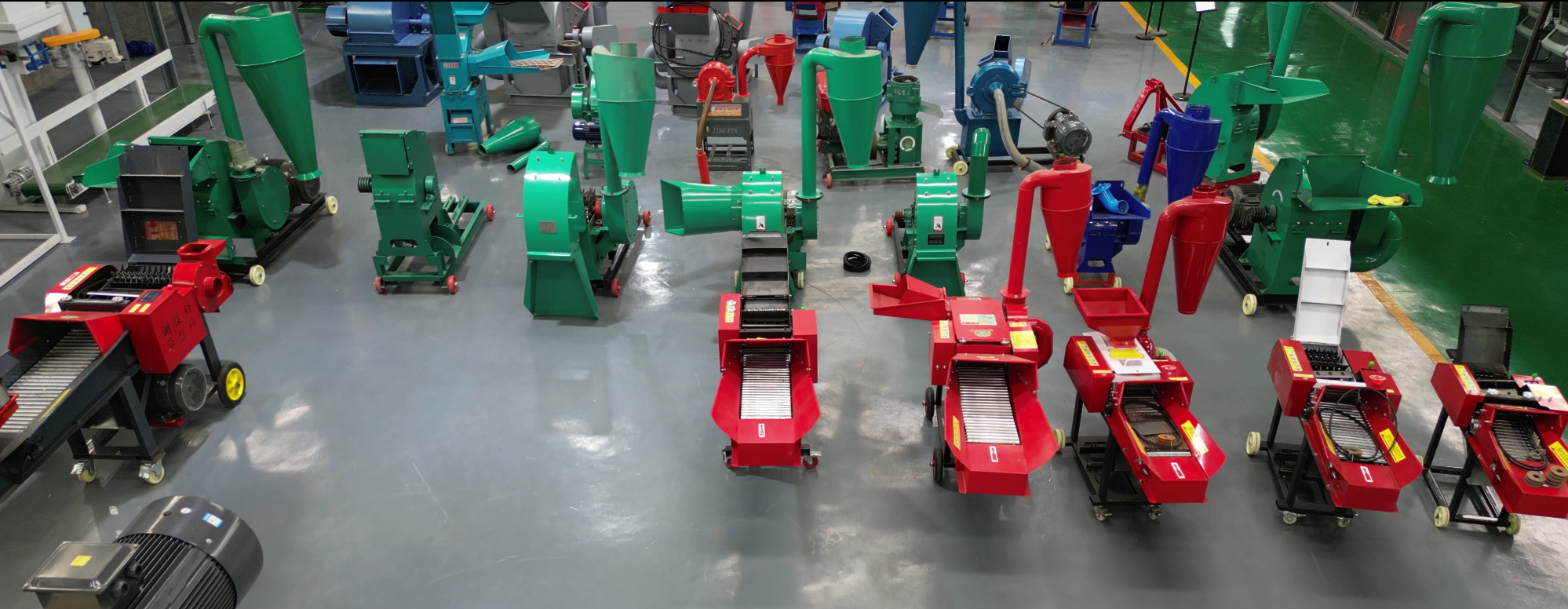
FCN.FM vertical chaff cutter machine in operation
Problem 1: Material Jamming and Blockages
Jamming is the single most common complaint from chaff cutter operators. Material stops feeding, the motor strains, and production halts.
Likely Causes
- Overfeeding — pushing material into the feed hopper faster than the blades can process it
- Wet or tangled material — long, fibrous green fodder or damp straw wrapping around the blade shaft
- Dull blades — worn cutting edges cannot slice cleanly, causing material to bunch rather than cut
- Incorrect feed angle — feeding material at an angle rather than perpendicular to the blades
How to Fix It
- Stop the machine immediately and disconnect power before clearing any blockage.
- Remove the jammed material from the feed chute and cutting chamber using a wooden tool — never use bare hands near the blades.
- Feed material in smaller, more consistent batches. For the FCN.FM vertical chaff cutter (model 2.8, 4KW motor, 600–800kg/h capacity), maintain a steady feed rate that matches the machine's rated throughput.
- If wet material is the issue, allow green fodder to wilt slightly before cutting, or reduce the feed volume by 20–30%.
- Sharpen or replace blades if they show visible rounding or nicks along the cutting edge.
Problem 2: Uneven or Inconsistent Cut Length
When output contains a mix of long uncut strands and fine powder, the machine is not cutting uniformly. This affects feed palatability and can lead to feed wastage.
Likely Causes
- Blade-to-anvil gap too wide — the clearance between the moving blade and the fixed anvil (or counter-blade) has increased due to wear
- Worn or damaged blades — blades that have lost their edge tear rather than shear the material
- Inconsistent feed rate — irregular feeding causes some material to pass through without full contact with the blades
- Loose blade bolts — blades that are not torqued correctly vibrate and cut at inconsistent angles
How to Fix It
- Adjust the blade-to-anvil clearance according to the manufacturer's specification. On most FCN.FM chaff cutters, this gap should be minimal — typically under 1mm for dry straw and slightly wider for wet green fodder. Confirm the exact tolerance with FCN.FM technical support.
- Inspect all blades for sharpness and damage. Replace any blade that is chipped, cracked, or worn beyond 50% of its original width.
- Tighten all blade mounting bolts to the specified torque. Loose bolts are a safety hazard as well as a performance issue.
- Train operators to feed material steadily and evenly rather than in large irregular bunches.
Problem 3: Unusual Noise or Excessive Vibration
A chaff cutter that suddenly becomes louder or starts vibrating strongly is signalling a mechanical problem that should not be ignored.
Likely Causes
- Foreign objects in the cutting chamber — stones, metal fragments, or hard debris entering with the fodder
- Unbalanced or damaged blades — a bent or unevenly worn blade creates an imbalance at operating speed
- Worn bearings — bearing wear in the blade shaft or motor produces a grinding or rumbling sound
- Loose mounting bolts — the machine base or motor mount has worked loose over time
- Belt issues — a worn, loose, or misaligned drive belt slaps and squeals during operation
How to Fix It
- Stop the machine and inspect the cutting chamber for foreign objects. Remove any debris before restarting.
- Check each blade for damage and balance. Replace any blade that is visibly bent or worn unevenly.
- Listen to the bearings with the machine running (from a safe distance). A grinding or clicking sound indicates bearing replacement is needed.
- Inspect and tighten all base mounting bolts and motor mount bolts.
- Check drive belt tension and alignment. A belt should deflect approximately 10–15mm under moderate thumb pressure at the midpoint of its span.
Problem 4: Motor Overheating or Tripping
When the motor overheats or the circuit breaker trips repeatedly, the machine is being overworked or there is an electrical issue.
Likely Causes
- Sustained overloading — feeding material beyond the machine's rated capacity for extended periods
- Low supply voltage — voltage below the motor's rated input causes higher current draw and heat buildup
- Blocked cooling vents — dust and chaff debris accumulating on the motor housing
- Worn motor bearings — increased mechanical resistance forces the motor to work harder
How to Fix It
- Reduce the feed rate to match the rated capacity. For example, the FCN.FM vertical chaff cutter (model 3.8, 5.5KW motor, 800–1500kg/h capacity) should not be fed beyond 1500kg/h on a sustained basis.
- Verify that the supply voltage matches the motor's rated voltage. Use a multimeter to check voltage at the motor terminals under load.
- Clean dust and debris from motor cooling fins and ventilation openings regularly.
- Allow the motor to cool before restarting after a thermal trip. Repeated tripping without addressing the cause will shorten motor life.
Quick Diagnostic Reference Table
| Symptom | Most Likely Cause | First Action | FCN.FM Model Note |
|---|---|---|---|
| Material jams in feed chute | Overfeeding or dull blades | Reduce feed rate; inspect blades | Applies to all vertical and horizontal models |
| Long uncut strands in output | Blade-to-anvil gap too wide | Adjust clearance; sharpen blades | Check model-specific gap spec with FCN.FM |
| Grinding or rattling noise | Foreign object or worn bearing | Stop machine; inspect chamber | Common after processing field-cut material |
| Motor overheats or trips | Overloading or low voltage | Reduce feed; check supply voltage | 4KW models: 600–800kg/h max; 5.5KW: 800–1500kg/h |
| Excessive vibration | Unbalanced blade or loose bolts | Stop; check blade condition and bolts | Inspect after blade replacement |
| Output too fine or powdery | Blades too sharp for material or gap too tight | Adjust gap slightly wider | Especially relevant for dry straw processing |
Preventive Maintenance to Avoid Future Problems
Most chaff cutter problems can be prevented with a simple maintenance routine:
- Daily: Clean the cutting chamber and feed chute after each use. Remove accumulated chaff and debris.
- Weekly: Check blade sharpness and tightness. Inspect the drive belt for wear and proper tension.
- Monthly: Lubricate bearings according to the service manual. Check electrical connections and motor cooling vents.
- Seasonally: Replace blades if worn. Have a qualified technician inspect bearings and motor condition.
FCN.FM chaff cutter in normal operation — steady feed, clean cut, minimal vibration
When to Contact the Manufacturer
Some problems require professional attention. Contact FCN.FM technical support if:
- The motor requires replacement or rewinding
- Bearings need professional press-fitting
- Blade alignment or anvil adjustment requires specialised tools
- The machine has sustained structural damage
- You need OEM spare parts or a replacement blade set
FCN.FM provides technical guidance, spare parts supply, and OEM/ODM support for all its chaff cutter models. Whether you operate a vertical chaff cutter (model 2.8, 4KW, 600–800kg/h) or a higher-capacity 5.5KW unit (800–1500kg/h), the company's service team can help diagnose persistent issues and supply the correct replacement components.
Conclusion
Most chaff cutter problems — jamming, uneven cuts, unusual noise, and motor overheating — trace back to a handful of preventable causes: dull blades, incorrect clearances, overfeeding, and neglected maintenance. A structured troubleshooting approach that addresses the symptom systematically saves downtime and extends machine life. For persistent issues, genuine spare parts, or guidance on selecting the right chaff cutter for your operation, contact FCN.FM for professional technical support and OEM-customised solutions.
References
- FCN.FM — Chaff Cutter Machine Product Page: https://www.chaffcuttermachine.com/
- FCN.FM — Vertical Chaff Cutter Machine Specifications: https://www.chaffcuttermachine.com/
- FAO — Animal Feed Resources Information System (feed processing guidance): https://www.fao.org/
- OSHA — Agricultural Machinery Safety Guidelines: https://www.osha.gov/