A multifunctional chaff cutter and crusher is a single machine that performs two distinct feed-preparation tasks — chopping fibrous material into short lengths and crushing or grinding harder materials into smaller particles — without requiring a second piece of equipment. For livestock farms and feed processors working with mixed raw materials, this combined capability can simplify the workflow, reduce equipment footprint, and lower the total cost of preparing animal feed. In this guide, we explain how these machines work, what materials they handle, and when a multifunctional unit makes more sense than running two separate machines.
Video: Chaff cutter in operation, processing wet and dry fodder material.
How a Combined Cutting and Crushing Machine Works
A multifunctional chaff cutter and crusher integrates two processing mechanisms into one housing, driven by a single motor or engine. Understanding how each mechanism operates helps buyers match the machine to their actual raw materials.
The Cutting Mechanism
The cutting side uses a set of rotating blades — typically 2 to 4 hardened steel blades mounted on a flywheel or rotor — to slice fibrous material into short, uniform lengths. Material is fed into a chute, gripped by a feed roller, and drawn past the blades at high speed. The cutting length is determined by blade count, rotor speed, and the feed rate, and most machines allow operators to adjust the output length within a defined range.
The Crushing Mechanism
The crushing side uses either a hammer mill arrangement or a set of toothed rollers to break down harder, brittle materials. Rather than slicing cleanly, the crushing mechanism fractures grains, corn cobs, and dry stalks into smaller particles suitable for mixing into feed rations. The output particle size depends on screen size (where fitted) and the gap between crushing elements.
How the Two Functions Combine
In a multifunctional unit, the operator selects the appropriate feed chute or adjusts the machine configuration depending on the material being processed. Some designs allow both functions to run simultaneously on mixed feedstock; others require the operator to switch between cutting and crushing modes. The shared motor and frame mean one power source drives both operations, which is the core efficiency advantage over running two standalone machines.
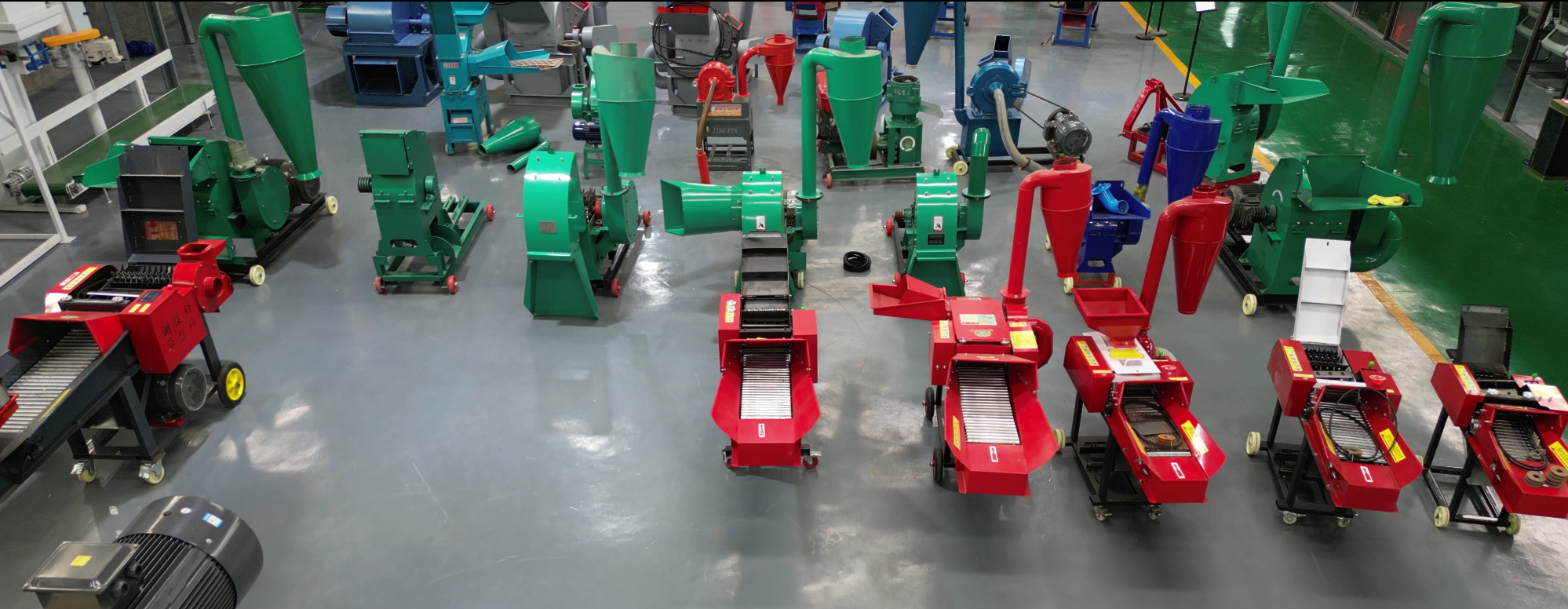
Image: Chaff cutter machine showing the feed chute and cutting chamber assembly.
Raw Materials a Multifunctional Chaff Cutter and Crusher Handles
The versatility of these machines comes from the breadth of materials they can process. Most units handle both wet and dry feedstock, though output quality and throughput vary by material type.
Materials Suited to the Cutting Function
- Fresh green grass and pasture cuttings
- Hay and dried grass
- Wheat straw, rice straw, and barley straw
- Corn stalks and sorghum stalks
- Sugarcane tops and leaves
- Alfalfa and other legume forages
Materials Suited to the Crushing Function
- Corn, wheat, and other cereal grains
- Corn cobs
- Soybean meal and oilseed cake
- Dry stalks and husks
- Bran and other milling by-products
Wet vs. Dry Material Considerations
Most chaff cutter models on the market are rated for both wet and dry material, but throughput and blade wear differ. Wet, green material cuts cleanly but can build up residue in the crushing chamber if not cleaned after use. Dry, brittle material processes efficiently through both mechanisms but generates more dust. Operators processing predominantly wet material should plan for regular cleaning to maintain performance.
When a Multifunctional Unit Replaces Two Separate Machines
The strongest case for a combined machine is a farm or feed operation that regularly processes both fibrous forage and harder feed components. Below are common scenarios where a multifunctional unit delivers clear practical advantages.
Small and Medium-Sized Livestock Farms
A mixed livestock farm preparing daily feed rations often needs both chopped green fodder and crushed grain in the same feeding cycle. Running a dedicated chaff cutter and a separate grinder means two motors, two sets of maintenance schedules, and more floor space. A multifunctional unit consolidates both tasks into one machine footprint.
Feed Preparation Where Batch Size Is Moderate
For operations processing roughly 600 to 1,500 kg per hour, a combined machine matches typical daily throughput without requiring industrial-scale equipment. For example, a vertical chaff cutter machine (model 2.8) with a 4KW motor delivers a capacity of 600-800kg/h and handles both wet and dry material, making it suitable for smaller farms that need cutting and basic crushing in one pass.
Operations with Limited Power Infrastructure
Where only a single power connection or generator is available, running two machines simultaneously may not be practical. A multifunctional unit draws power from one source, simplifying electrical planning and reducing generator sizing requirements.
Cost-Sensitive Buyers Comparing Total Equipment Investment
Purchasing one multifunctional machine is generally more cost-effective than buying a chaff cutter and a separate crusher, particularly once installation, wiring, and maintenance are factored in. For distributors and importers serving price-sensitive markets, this makes the combined unit an easier product to position.
Key Specifications and Selection Criteria
When evaluating a multifunctional chaff cutter and crusher, buyers should compare the following parameters against their actual production requirements.
| Specification | What to Check | Why It Matters |
|---|---|---|
| Motor power | Match to available supply (e.g., 4KW or 5.5KW) | Determines throughput and material hardness limit |
| Capacity | Rated kg/h for both wet and dry material | Must meet daily feed preparation volume |
| Cutting length range | Adjustable or fixed | Affects feed palatability and digestibility |
| Crushing output size | Screen or gap setting | Determines particle size for mixing |
| Blade material | Hardened steel or alloy | Affects sharpening interval and blade life |
| Wet/dry rating | Manufacturer confirmation | Not all machines perform equally on green material |
| Frame construction | Steel gauge and weld quality | Affects durability under continuous use |
Matching Motor Power to Workload
Motor power is the primary indicator of what a machine can process continuously. As a reference point from the FCN.FM product range, the vertical chaff cutter (model 3.8) uses a 5.5KW motor and delivers a capacity of 800-1500kg/h, while the 4KW models (vertical and horizontal, model 2.8) are rated at 600-800kg/h. Buyers should confirm exact specifications for multifunctional configurations directly with the manufacturer, as combined cutting-and-crushing duty can affect rated throughput.
Blade Quality and Spare Parts Availability
Blades are the primary wear item on any chaff cutter. Buyers should confirm the blade material, the number of blades supplied, and whether replacement blades and other chaff cutter parts are readily available from the manufacturer or local distributors. Machines with non-standard blade fittings can create long-term supply problems.
Power Source Options
Multifunctional units are typically available in electric motor configuration, and some manufacturers offer diesel engine variants for off-grid or field-based operation. Buyers should confirm which power options are available for the specific model they are considering.
Maintenance and Operating Considerations
A combined machine requires attention to both the cutting and crushing mechanisms to maintain consistent output quality.
Daily Operating Checks
- Inspect blades for dullness, chips, or cracks before each shift
- Check feed roller tension and clear any wrapped material
- Confirm the crushing chamber is clear of accumulated residue
- Verify belt tension and alignment (where belt-driven)
- Listen for unusual vibration or noise during startup
Periodic Maintenance
- Sharpen or replace blades at intervals determined by material type and volume
- Inspect crushing elements (hammers or rollers) for wear
- Lubricate bearings according to the manufacturer's schedule
- Check electrical connections and motor temperature under load
- Clean the machine thoroughly after processing wet material
Safety Practices
Operators should never reach into the feed chute while the machine is running, and emergency stop mechanisms should be tested regularly. Feed material should be free of metal objects, stones, and other foreign matter that can damage blades and crushing elements.
Choosing Between a Multifunctional Unit and Separate Machines
The decision ultimately comes down to material mix, throughput requirements, and operational constraints.
A multifunctional unit is the better choice when:
- You regularly process both fibrous forage and crushable grain or stalks
- Floor space and power connections are limited
- Daily throughput falls within the 600–1,500 kg/h range typical of mid-size machines
- Capital budget favors one machine over two
- Maintenance simplicity is a priority
Separate machines may be better when:
- Cutting and crushing volumes are both high enough to justify dedicated equipment
- You need to run both processes simultaneously at full capacity
- One function requires specialized features the combined unit does not offer
- Existing equipment already covers one of the two functions
Conclusion
A multifunctional chaff cutter and crusher consolidates two essential feed-preparation tasks into a single machine, offering practical advantages for mixed-livestock farms, small feed processors, and operations with limited space or power infrastructure. By understanding how the cutting and crushing mechanisms work, what materials each handles, and how to match motor power and capacity to actual workload, buyers can make an informed decision about whether a combined unit fits their operation.
FCN.FM manufactures a range of chaff cutter machines and can advise on multifunctional configurations, specifications, and OEM/ODM customization options. To discuss your specific feed-preparation requirements and request a quotation, contact our team with details of your raw materials, daily throughput, and power availability.
References
- FCN.FM — Chaff Cutter Machine product specifications: https://www.chaffcuttermachine.com/
- FAO — Animal Feed Resources Information System (feed processing and forage preparation): https://www.fao.org/land-water/water/water-management/en/
- USDA — Animal Feed and Pet Food resources: https://www.usda.gov/