How Does a Chaff Cutter Work? A Practical Introduction
If you are considering a chaff cutter for your farm, feedlot, or fodder processing business, one of the first questions you will ask is: how does a chaff cutter work? Understanding the basic operating sequence — feeding, cutting, and discharge — helps you choose the right machine configuration, set realistic expectations for output, and operate the equipment safely. This guide walks through the general working principle of a chaff cutter, explains the difference between vertical and horizontal designs, and highlights what to confirm with a manufacturer before placing an order.
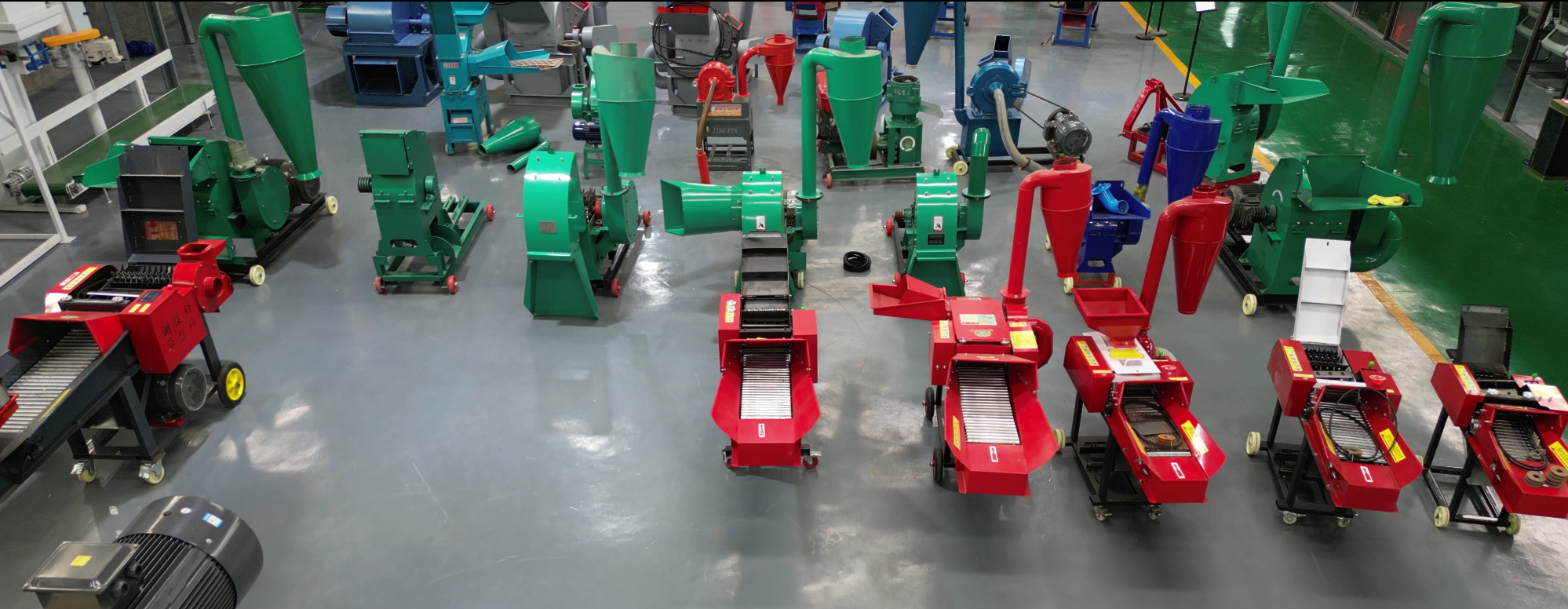
Chaff cutter machines are used to chop grass, straw, hay, and other fodder into short, manageable lengths for livestock feeding.
The Basic Working Principle of a Chaff Cutter
A chaff cutter is a mechanical device designed to reduce long, fibrous plant material — such as grass, straw, hay, corn stalks, or green fodder — into short, uniform pieces. Shorter fodder is easier for animals to digest, reduces wastage, and mixes more evenly with other feed ingredients.
Regardless of the specific model, most chaff cutters follow the same three-stage sequence:
1. Material Feeding
Raw fodder is loaded into the feed hopper or feed tray. In manual and small electric models, the operator pushes the material toward the cutting chamber by hand or with a feed roller. In larger or tractor-operated models, a powered feed roller or conveyor belt draws the material in at a controlled rate. Consistent feeding is important — overloading the hopper can cause blockages, while underfeeding reduces throughput.
2. Cutting Action
Inside the cutting chamber, a set of rotating blades (usually 2 to 4 knives mounted on a flywheel or drum) spins at high speed. As the fodder is fed forward, the blades shear the material against a fixed counter-knife or shear plate. The cutting length is typically determined by the feed rate, the number of blades, and the rotational speed of the cutting assembly. Some models allow the cutting length to be adjusted by changing the feed roller speed or the number of knives in use.
3. Discharge
Once cut, the chopped fodder is thrown out of the machine through a discharge chute. In many designs, the centrifugal force generated by the rotating flywheel propels the cut material outward, allowing it to be directed into a collection bag, cart, or silage pit. The direction and height of the discharge chute can often be adjusted to suit the working setup.
Watch a Chaff Cutter in Action
Seeing the feeding, cutting, and discharge sequence in real time makes the working principle much easier to understand. The following video shows a chaff cutter processing fodder in a typical operating setup:
Video reference: general chaff cutter working demonstration. Specific model configuration and measured output should be confirmed with the manufacturer.
Vertical vs. Horizontal Chaff Cutter: What Is the Difference?
The terms "vertical" and "horizontal" refer to the orientation of the cutting drum or flywheel inside the machine. Both designs perform the same basic function, but they differ in feeding direction, discharge behaviour, and suitability for different materials.
| Feature | Vertical Chaff Cutter | Horizontal Chaff Cutter |
|---|---|---|
| Cutting assembly orientation | Vertical drum or flywheel | Horizontal drum or flywheel |
| Typical feeding direction | Top-fed through a vertical hopper | Side-fed through an inclined or horizontal tray |
| Discharge behaviour | Material is thrown upward and outward | Material is thrown forward through a side chute |
| Best suited for | Green fodder, grass, and mixed wet/dry material | Straw, hay, and dry fibrous material |
| Footprint | Generally more compact | Generally longer body |
Both configurations are available with electric motors or diesel engines, and many models are designed to handle wet and dry material without modification.
Key Specifications to Understand Before Buying
When comparing chaff cutter models, three specifications matter most for matching a machine to your workload:
Motor Power
Motor power determines how much material the machine can process continuously and how well it handles tough or wet fodder. FCN.FM offers the following verified configurations:
- Vertical chaff cutter machine (Model 2.8): 4KW motor, capacity 600-800kg/h. High efficiency, easy operation, wet and dry material available.
- Horizontal chaff cutter machine (Model 2.8): 4KW motor, capacity 600-800kg/h. High efficiency, easy operation, wet and dry material available.
- Vertical chaff cutter (Model 3.8): 5.5KW motor, capacity 800-1500kg/h. High efficiency, easy operation, wet and dry material available.
Processing Capacity
Capacity figures (expressed in kg/h) indicate the approximate throughput under normal operating conditions. Actual output depends on the type of material, its moisture content, and how consistently it is fed. For example, dry straw is generally easier to process at high rates than wet green fodder, which is heavier and more fibrous.
Material Compatibility
Not all chaff cutters handle every type of fodder equally well. Before ordering, confirm which materials the machine is designed to process — for example, green grass, dry straw, hay, corn stalks, or silage. Many FCN.FM models are rated for both wet and dry material, which provides flexibility across seasons and feed types.
Safety and Operating Best Practices
A chaff cutter is a powerful machine with fast-moving blades, so safe operation is essential:
- Never reach into the feed hopper while the machine is running. Use a push stick or feed roller to guide material.
- Wear protective equipment, including safety glasses and hearing protection, especially during extended operation.
- Check blade condition regularly. Dull blades reduce cutting efficiency and increase motor load. Follow the manufacturer's guidance for sharpening or replacement intervals.
- Clear blockages only after the machine is fully stopped and disconnected from power.
- Do not exceed the rated capacity. Consistent, controlled feeding produces better results than overloading the hopper.
How to Choose the Right Chaff Cutter for Your Operation
Selecting the right machine comes down to matching the specification to your actual workload:
- Estimate your daily fodder volume. If you process 500–800 kg per day, a 4KW model with a 600-800kg/h capacity may be sufficient. For larger operations requiring 800–1500 kg/h, the 5.5KW vertical chaff cutter (Model 3.8) offers higher throughput.
- Consider your power supply. Electric models are ideal where stable grid power is available. For remote locations or field use, diesel engine or tractor-operated configurations may be more practical.
- Evaluate your material mix. If you process both wet green fodder and dry straw, confirm that the model is rated for wet and dry material.
- Think about portability and space. Vertical models generally have a smaller footprint, while horizontal models may suit fixed installations with side discharge into a cart or pit.
- Ask about customization. Many manufacturers, including FCN.FM, offer OEM and ODM options for motor power, hopper size, discharge chute configuration, and branding.
Conclusion
A chaff cutter works by feeding raw fodder into a cutting chamber where rotating blades shear it into short pieces, which are then discharged through a chute for collection. The core principle is simple, but the right machine for your operation depends on motor power, capacity, material compatibility, and configuration — vertical or horizontal. FCN.FM manufactures a range of chaff cutter models with verified specifications, and our team can help you confirm the right configuration for your farm or feed processing business. Contact us with your processing requirements, and we will recommend a suitable model and provide a detailed quotation.
References
- FCN.FM — Vertical Chaff Cutter Machine (Model 2.8) product specifications: https://www.chaffcuttermachine.com
- FCN.FM — Horizontal Chaff Cutter Machine (Model 2.8) product specifications: https://www.chaffcuttermachine.com
- FCN.FM — Vertical Chaff Cutter (Model 3.8) product specifications: https://www.chaffcuttermachine.com