Choosing the right chaff cutter is one of those decisions that looks simple on paper but has real consequences on the farm. Buy a machine that is too small and your operator spends half the day feeding it by hand while cattle wait at the trough. Buy one that is too large and you have paid for capacity you will never use, plus a heavier power bill every month. The most reliable way to avoid both mistakes is to work backwards from a single number: the chaff cutter capacity per head your herd actually requires each day.
This guide walks through a straightforward method to convert herd size and feeding frequency into a kg/hour requirement, then maps that figure to real machine capacities so you can shortlist the right model with confidence.
Why Capacity Planning Matters More Than Machine Price
Two farms with the same number of animals can need very different machines. A dairy operation feeding silage twice a day puts a sharp, short peak load on the cutter. A beef backgrounding operation feeding hay once daily spreads the same tonnage over a longer window. The machine that suits one will frustrate the other.
Capacity planning protects you in three ways:
- It prevents bottlenecks. The cutter becomes the pacing item in your feeding routine. If it cannot keep up, every other task waits.
- It protects motor life. A machine run continuously at or above its rated capacity overheats, trips breakers, and wears blades faster.
- It keeps your power costs predictable. Matching motor size to real workload avoids paying for unused kilowatts.
Step 1: Calculate Daily Fodder Demand Per Head
Start with how much chopped fodder each animal actually eats. Intake varies by species, body weight, and production stage, but the figures below are reliable planning averages for fresh or ensiled green fodder.
| Animal | Typical daily green fodder intake per head |
|---|---|
| Dairy cow (milking) | 25–35 kg |
| Beef cattle (finishing) | 15–25 kg |
| Sheep or goat | 3–5 kg |
| Buffalo | 30–40 kg |
If you feed a mix of green fodder and dry roughage, apply the per-head figure only to the portion that passes through the chaff cutter. Dry straw fed whole does not need chopping; silage and green fodder usually do.
Step 2: Convert Daily Demand to Hourly Machine Load
Once you know total daily tonnage, divide it by the number of hours you are willing to run the machine each day. This is the step most buyers skip, and it is where undersized machines get chosen.
Use this formula:
Required capacity (kg/h) = (Herd size × kg per head) ÷ operating hours per day
Worked Example
A 60-head dairy farm feeding 30 kg of green fodder per cow, chopped once daily in a single 3-hour window:
- Daily demand: 60 × 30 = 1,800 kg
- Required capacity: 1,800 ÷ 3 = 600 kg/hour
The same herd fed in two shorter sessions (1.5 hours each, still 3 hours total) has the same requirement. But if the manager wants the whole job done in 2 hours, the requirement jumps to 900 kg/hour — a different machine class entirely.
Adjust for Real-World Losses
Rated capacities are measured under clean, continuous feed conditions. On the farm, add a buffer:
- Feeding gaps: the operator is not feeding a perfectly steady stream. Add 15–20%.
- Material variation: wet, tangled, or fibrous material feeds slower than dry, loose straw. Add 10–15% for wet silage or long-stem hay.
- Blade wear: capacity drops as blades dull between sharpenings. Add 5–10%.
A practical rule: take your calculated requirement and multiply by 1.3 to find the minimum rated capacity you should shop for.
Step 3: Match Your Requirement to Machine Capacity
With a buffered kg/hour figure in hand, you can shortlist machines quickly. FCN.FM manufactures chaff cutters in two capacity classes that cover the needs of most small and medium livestock operations.
| FCN.FM Model | Motor Power | Rated Capacity | Best Fit |
|---|---|---|---|
| Model 2.8 (vertical or horizontal) | 4KW | 600–800kg/h | Herds up to roughly 60–70 cattle, or smaller herds fed in a tight time window |
| Model 3.8 (vertical) | 5.5KW | 800–1500kg/h | Herds of roughly 70–130 cattle, or operations processing silage and wet material |
Both models handle wet and dry material, which matters if your fodder mix changes seasonally between green chop and dry straw. Both are designed for high efficiency and easy operation, so a single trained operator can run either machine without difficulty.
Chaff cutter in operation — note the steady feed rate that produces consistent chop length.
Step 4: Factor in Silage and Wet Material Conditions
If your operation makes its own silage, capacity planning needs one more layer. Silage is denser and wetter than dry fodder, and it must be chopped and packed quickly to exclude air. A machine that is adequate for dry hay may struggle to hit its rated throughput on wet material.
Chaff Cutting Length and Silage Quality
For silage, chop length directly affects packing density and fermentation. Shorter chop (roughly 10–20 mm) packs tighter and ferments more reliably; longer chop leaves air pockets and risks spoilage. Confirm that the model you choose offers a cutting length suited to silage, not just dry roughage.
Wet and Dry Chaff Cutter Considerations
A true wet and dry chaff cutter needs:
- Sufficient motor power to handle the higher torque demand of wet, fibrous material
- Blade geometry that resists clogging with moist material
- A discharge path that does not trap wet fines
Both the Model 2.8 and Model 3.8 are rated for wet and dry material, but if silage is your primary feed, the higher-power Model 3.8 gives you more headroom, especially on days when material is wetter than usual.
Step 5: Plan for Growth and Peak Periods
The herd you have today is not the herd you will have in three years. When you shortlist a machine, ask two questions:
- What is my herd size in 24 months? If you expect to grow by more than 20%, size for the future number, not the current one.
- What is my peak daily load? Calving season, lactation peaks, and winter feeding all push intake higher than your annual average. Size for the peak, not the average.
Choosing the Model 3.8 when your calculation lands near the top of the Model 2.8 range is usually the more economical decision once you factor in the cost of downtime or a second machine later.
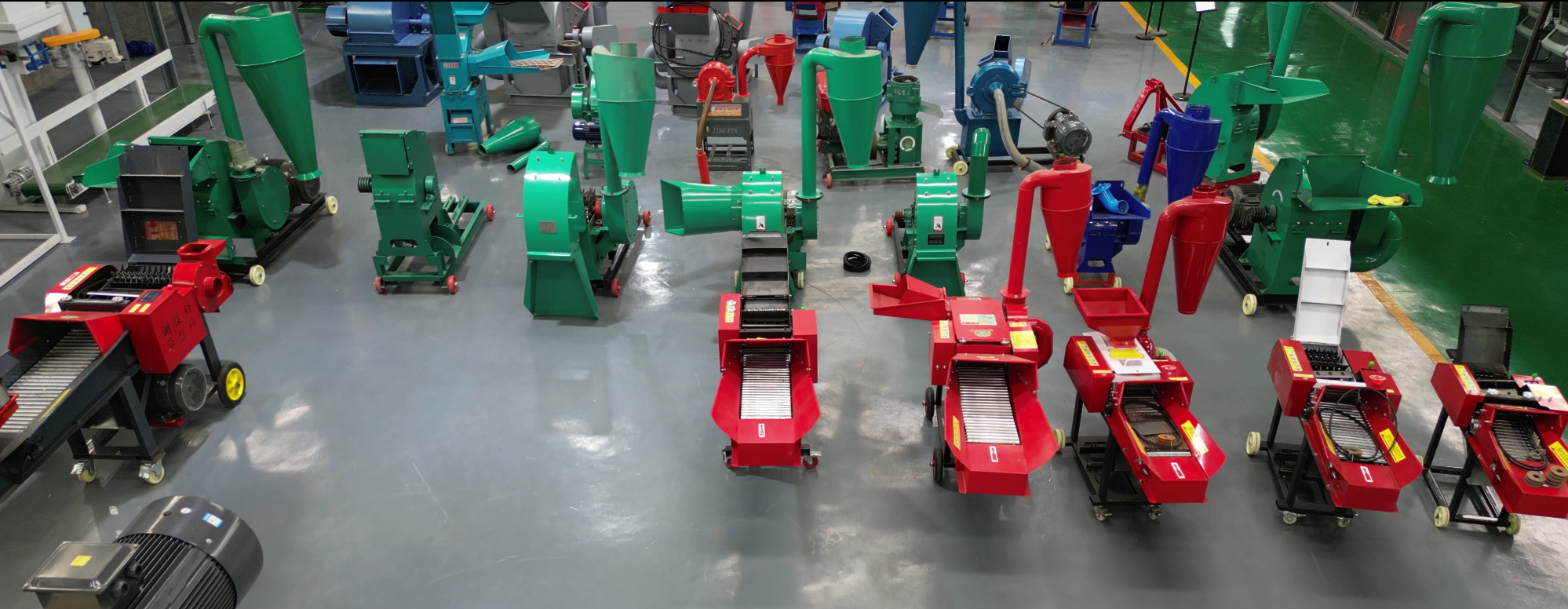
FCN.FM chaff cutter — available in vertical and horizontal configurations to suit different farm layouts.
Quick Reference: Capacity Planning Checklist
- [ ] Record herd size by animal type
- [ ] Apply daily green fodder intake per head
- [ ] Decide operating hours per day
- [ ] Divide demand by hours to get kg/hour
- [ ] Multiply by 1.3 for real-world buffer
- [ ] Shortlist a model whose rated capacity meets or exceeds the buffered figure
- [ ] Confirm wet/dry suitability and cutting length for your material
Conclusion
Matching machine capacity to herd size is not complicated, but it does require working through the numbers rather than guessing from price or appearance. Calculate your daily tonnage, divide by realistic operating hours, add a buffer for wet material and blade wear, and you will arrive at a kg/hour figure that points clearly to the right machine. For most operations, that figure lands in the 600–800kg/h or 800–1500kg/h range — exactly the two capacity classes FCN.FM builds.
If you would like help running these numbers for your specific herd and fodder conditions, or if you need a machine configured for a particular power supply or material, the FCN.FM team is glad to assist. Reach out with your herd size, feeding routine, and material type, and we will recommend the model that fits.
References
- FCN.FM Chaff Cutter Machine product specifications — https://www.chaffcuttermachine.com/
- FAO — Animal feed and fodder resources overview — https://www.fao.org/livestock/en/
- FAO — Silage making and fermentation guidance — https://www.fao.org/3/x6512e/x6512e00.htm